
Career profile

Food Preparation Worker

Food preparation workers get ingredients ready for cooks and assemble dishes served cold.

Uncut fruits and vegetables and bulk goods are the starting point. Turning them into amounts the kitchen staff can work with is your job.
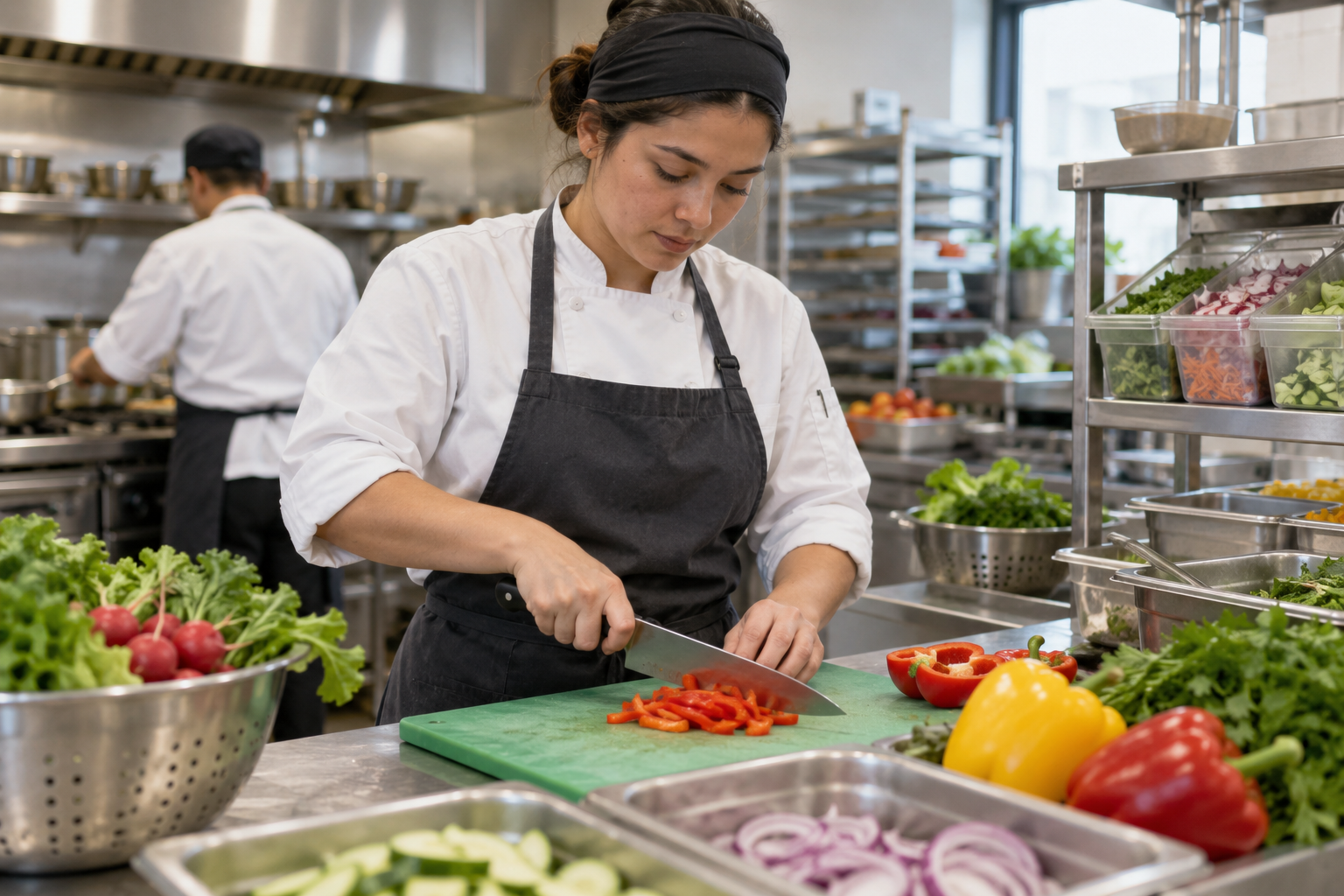
Food Preparation Worker prepares ingredients for a large meal.

A day in the life

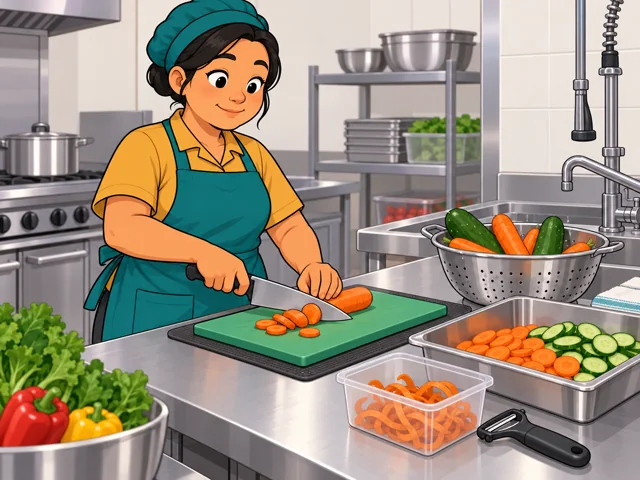
1A food preparation worker carefully slices a peeled carrot beside a colander of washed vegetables.

Wash, peel and cut produce

Wash the fruits and vegetables, peel them, and then cut them up for cooked dishes or salads.
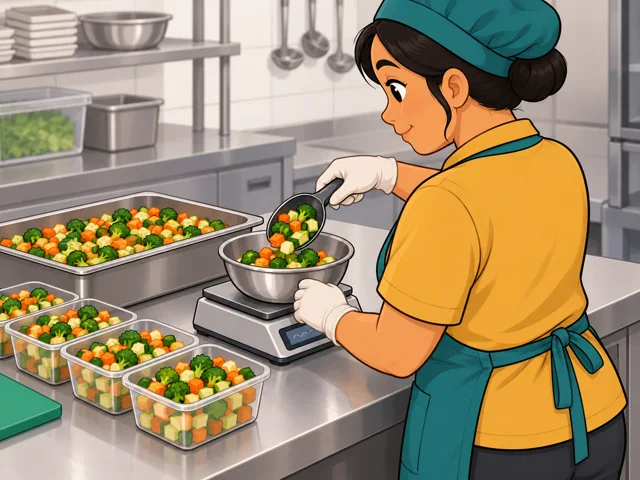
2The worker adjusts a bowl of vegetables on a food scale beside evenly filled serving containers.

Weigh ingredients and portion food

Use a scale to weigh ingredients and divide food into single portions so it's ready to serve.
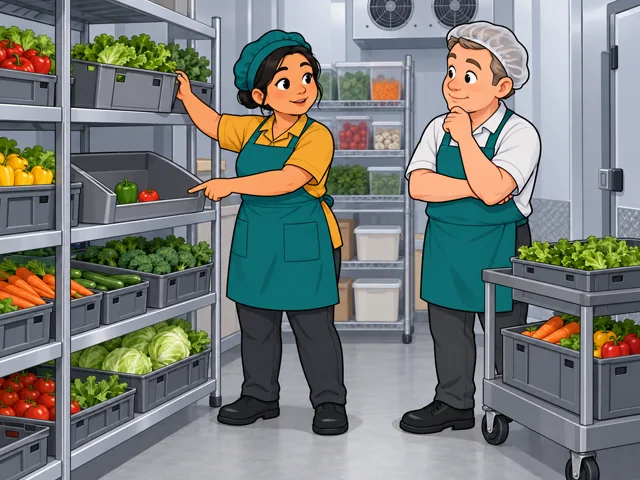
3The worker shelves a produce delivery and alerts a very light-skinned male shift lead to a nearly empty vegetable bin.

Put away deliveries, flag shortages

Carry incoming shipments to their storage spots and tell the shift lead when supplies start running low.
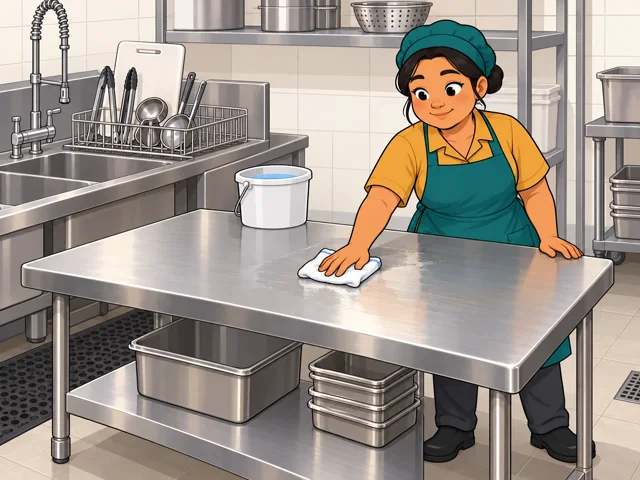
4The worker sanitizes a cleared kitchen worktable while washed utensils air-dry beside the sink.

Clean and sanitize your station

Wash the hand tools and disinfect the kitchen equipment along with the surfaces you used for prep.

Quick facts

Preparation

Learn on the job

United States

Pay

$16.98/hour

United States · May 2025

Outlook

3% decline

United States · 2025–2035

Quick orientation

Preparation, pay & outlook

Preparation

Learn on the job

Usually several weeks; no formal education credential typically required.

Geography
United States
Period
Not applicable

Pay

$16.98/hour

National median; $35,320 annual equivalent.

Geography
United States
Period
May 2025

Outlook

3% decline

135,700 projected annual openings, all from worker replacement.

Geography
United States
Period
2025–2035

Fit, tradeoffs & changing tools

Things to weigh

  • Standing, lifting, cuts, and slippery floors are real concerns.
  • Part-time hours and weekend shifts are common possibilities.

Where AI may help

Powered slicers help process ingredients.

What people still lead

You still handle food, portion it, and keep equipment clean.

What we can’t predict yet

How much preparation stays in the kitchen depends partly on purchasing precut ingredients.

Pay in context

Earnings

Compare hourly rates and scheduled hours; part-time work is common.

The wage spread

In May 2025, the bottom 10% earned below $12.41/hour; the top 10% exceeded $21.80. These are not career stages.

Geography
United States
Period
May 2025
Pay basis
Hourly wage percentiles

Workplace affects the comparison

Hourly medians: educational services $17.89; grocery and specialty food retailers $17.26; food services and drinking places $16.67.

Geography
United States
Period
May 2025
Pay basis
Industry-specific median hourly wages for food preparation workers

Getting started

Start in a prep job

What the route involves
Learn food handling and sanitation from an experienced worker.
What it can lead to
Build kitchen skills while employed.
What to check
Some employers require or prefer a diploma.

Train through Job Corps

What the route involves
Study culinary arts, practicing ingredient preparation, workspace cleaning, and commercial equipment use.
What it can lead to
Build preparation skills for food-service employment and a foundation for further culinary training.
What to check
Job Corps generally serves eligible low-income people ages 16–24; admissions staff determine eligibility. Culinary training requires introductory coursework, academic requirements, and written and practical tests. A diploma or equivalent can be earned there.

Cooks or kitchen managers direct the work.

After entry

Career paths

This starts where the entry routes leave off: early work, growing capability, and advancement or specialization.

  1. Get consistent

    Make portions accurately and learn where supplies belong.

  2. Handle more of the prep

    Learn additional equipment and track ingredient use.

  3. Move toward cooking

    Cooking skills can lead to assistant or line cook work.

Where you can work

School cafeterias

Schedules may be more regular and limited to the academic year.

  • Indoors
  • Physical demands

Hospital kitchens

Assemble meal trays to match patient diet sheets, sometimes along a tray assembly line.

  • Indoors
  • Physical demands

Try it

See whether the job clicks before you commit to the path.

Using ready-to-eat ingredients at home, measure four equal salad portions and clean your workspace. Notice whether you enjoy the repetition and keeping quantities consistent.

Stay safe: Use washed produce and ingredients that need no cooking or knife work.

Explore more careers

Sources

  1. O*NET OnLine. 35-2021.00 — Food Preparation Workers. Accessed 2026-10-02.
  2. U.S. Bureau of Labor Statistics. Food Preparation Workers — Occupational Outlook Handbook. Accessed 2026-10-02.
  3. Job Corps. Culinary Arts. Accessed 2026-10-02.
  4. Job Corps. Questions. Accessed 2026-10-02.

Your message goes to the Great Jobs team. How we use your information