
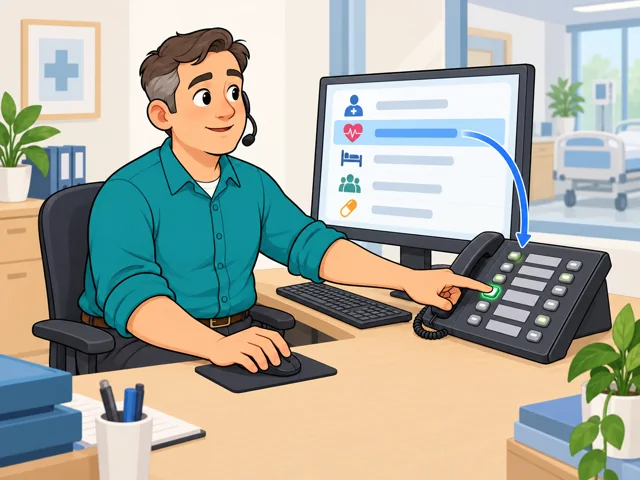
Route a call to its department
Find out what the caller needs, pick the department that fits and transfer them through the phone system.
Career profile
Switchboard operators connect callers to the right person and take clear messages for anyone unavailable.
Someone calls knowing what they need but not which department handles it. An operator listens, works out where the call belongs and sends it there.
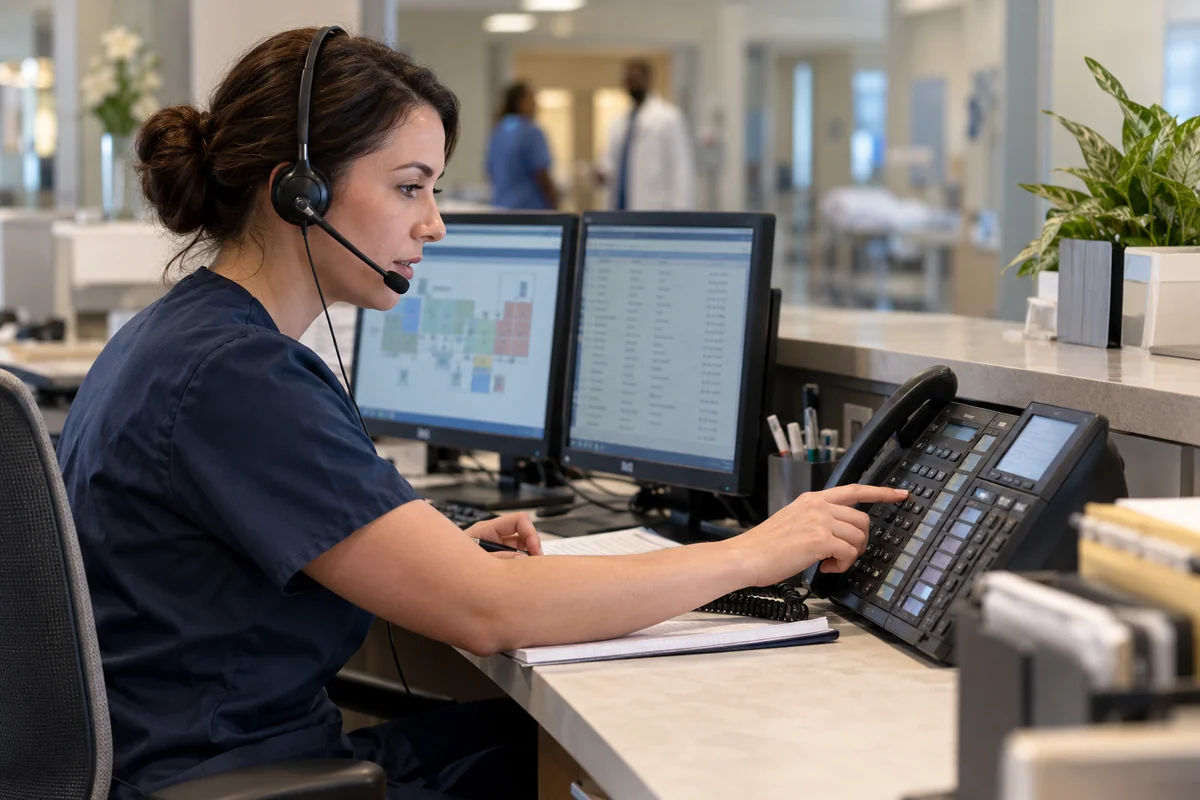
Find out what the caller needs, pick the department that fits and transfer them through the phone system.
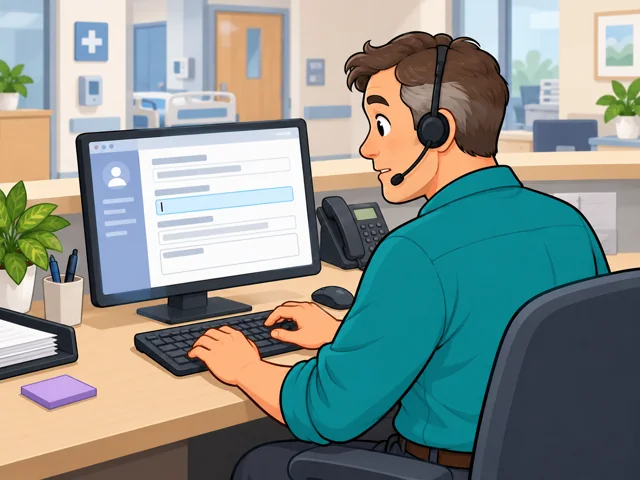
Type the request and contact details, reading back unclear names or numbers before passing it on.

At a hospital desk, use the on-call schedule to reach whichever clinician or response team is covering.
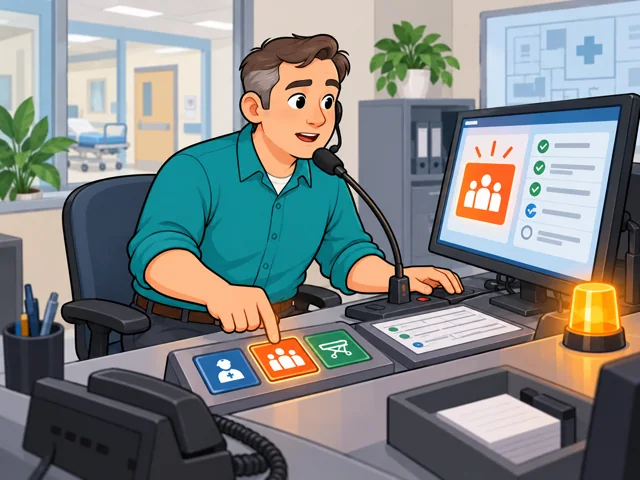
In certain hospital roles, an alarm can interrupt calls and you page responders urgently while tracking emergency communication.

When someone's extension changes, edit their phone directory entry so later callers reach the right desk.
United States · 2025–2035
United States · 2025
United States · 2025–2035
Quick orientation
A high school diploma or equivalent and short-term on-the-job training are typical.
About $18.57 an hour nationally in 2025, including answering-service operators.
Employment is projected to shrink during 2025–2035, with about 3,100 openings annually.
Some answering services offer artificial intelligence (AI) agents that answer calls, alongside systems that log calls and deliver messages.
Human agents clarify requests, check caller details, and handle conversations that need careful judgment.
How much routine answering moves to software—and how many difficult calls remain with people—will vary as employers change their services.
Pay in context
These national figures cover switchboard operators, including answering-service workers.
The 2025 median was $38,630 a year, or $18.57 an hour. Half earned more and half less; this is not a starting-pay promise.
In May 2025, the 10th-percentile annual wage was $29,990 and the 90th-percentile wage was $59,470. These are wage percentiles, not starting and senior salaries.
In May 2023, average hourly pay was $19.53 in general medical and surgical hospitals and $16.86 in business support services. These historical industry averages are not current offers or a guaranteed raise from changing settings.
Employment is projected to fall 26% from 2025 to 2035. About 3,100 openings per year are projected as workers leave the occupation, despite the overall decline.
A college degree is not the typical entry requirement. Look closely at whether a job teaches new operators or asks for related experience.
After entry
This starts where the entry routes leave off: early work, growing capability, and advancement or specialization.
Review calls with a trainer and use feedback to improve greetings, caller verification, and messages.
Learn new clients’ vocabulary and escalation rules so you can take more demanding conversations.
A possible next step is switchboard supervisor: train operators, assign work, and review performance. You would take responsibility for how other operators work as well as your own calls.
Routine calls share the desk with alarms and urgent pages. You work across clinical departments, security, and engineering, so interruptions can change your priorities quickly.
You answer for several businesses. Each client has its own greeting and rules for sending messages or reaching someone urgently, so you switch between different instructions throughout the day.
Try it
Make a fictional directory with four departments. Have a friend read five caller requests, including one unclear request and one for an unavailable person. Choose where each call goes and write any callback message. Compare notes: did you enjoy clarifying requests while keeping names and numbers accurate?
Stay safe: Use invented names and numbers; do not place real calls.