

Settle search rules with the client
Ask the client which pages the site's search should return, then write those rules down before coding.
Career profile
Web developers write the code that runs websites, from phone-sized menus to the machinery underneath.
Give a web developer a rough sketch and they'll build something users can click. When it fails or loads slowly, they find the cause.

Ask the client which pages the site's search should return, then write those rules down before coding.
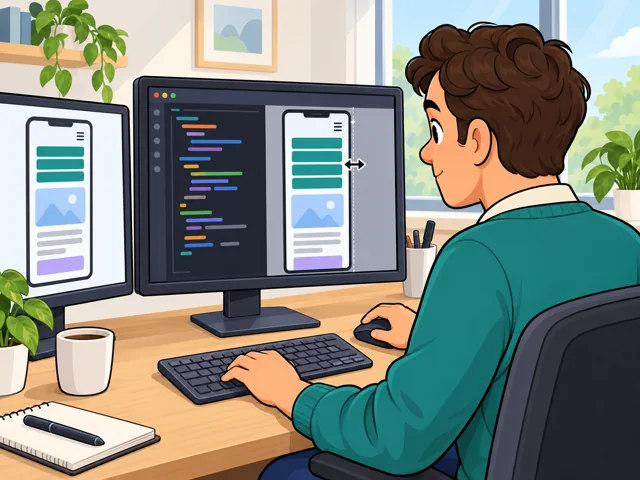
Build a designer's layout in browser code, then resize it and adjust how the menu opens and fits.
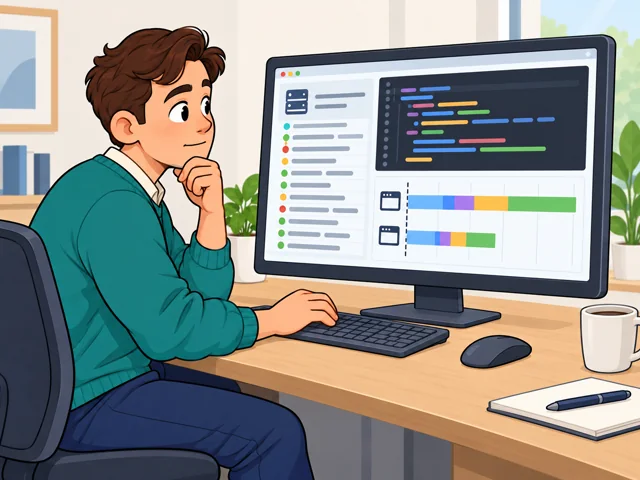
Check the load time and server logs, then change the code causing the lag and test again.

On content-heavy sites, set up templates and input fields so editors can change an event's date without code.
Quick orientation
Some employers accept demonstrated project skills instead of specific education credentials.
National median for web developers; the hourly median is $44.54.
About 5,300 openings a year are projected nationally over 2025–35.
Artificial intelligence (AI) coding assistants can suggest code and explain unfamiliar sections. Their output can still contain bugs or security flaws.
You decide whether a suggestion fits the website, review the changes, and test them before relying on them.
How much basic website work tools will take over—and how that changes entry-level work—remains uncertain.
Pay in context
Pay varies with experience, location, responsibility, and industry.
The median was $92,650 a year, or $44.54 an hour. The 10th and 90th percentile annual wages were $48,100 and $162,290. These describe the wage distribution, not starting and senior salaries.
Annual medians were $119,940 in information industries and $84,450 in educational services, including public and private institutions.
Employment is projected to grow 3.8%, with about 5,300 openings annually. Openings include people leaving the occupation, not just newly created jobs.
Employers differ in how they weigh education and demonstrated ability.
After entry
This starts where the entry routes leave off: early work, growing capability, and advancement or specialization.
Learn an existing site by making small repairs and recording how you tested them.
Build a reusable page template or interactive feature, including how it behaves across devices.
Take on more complex browser interfaces or specialize in the publishing systems and databases behind sites.
Projects can move between client marketing sites and interactive products. You may split the work with developers specializing in browser interfaces or publishing platforms.
You can maintain the institution’s pages while helping communications and student-services staff publish updates. Teaching staff to use the publishing system can be part of the job.
Try it
Build a simple event page on your computer using HyperText Markup Language (HTML) and Cascading Style Sheets (CSS). Add a menu, then narrow the browser window and fix anything that overlaps. Notice whether you enjoy turning a layout into code and revising it when it breaks.
Stay safe: Use made-up event details; you do not need to publish the page.
Keep exploring