Career profile

Mechanical Insulation Installer

Insulation workers wrap ducts, pipes and other equipment in insulation to control heat or cold.

Straight pipe is easy to cover, but every bend and bracket turns fitting the insulation into a puzzle you solve with your hands.
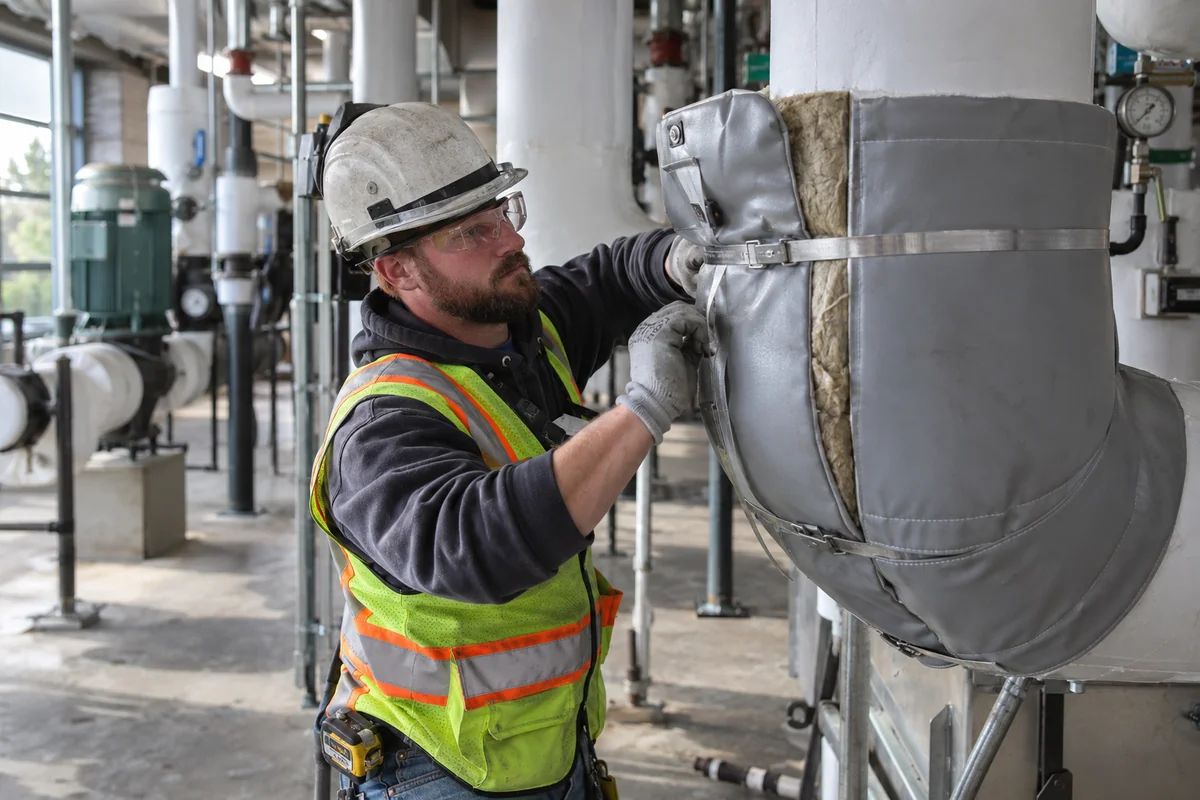
Mechanical insulation installer wraps insulation around industrial pipes.

A day in the life

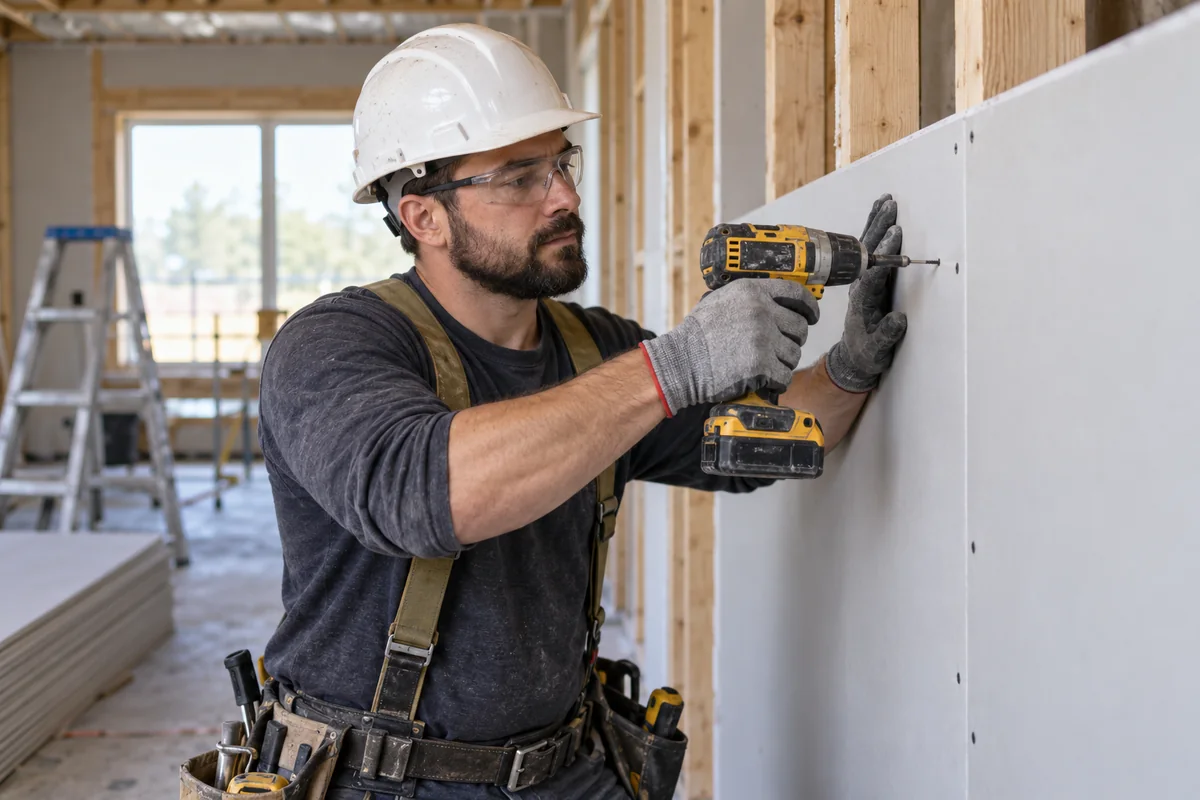
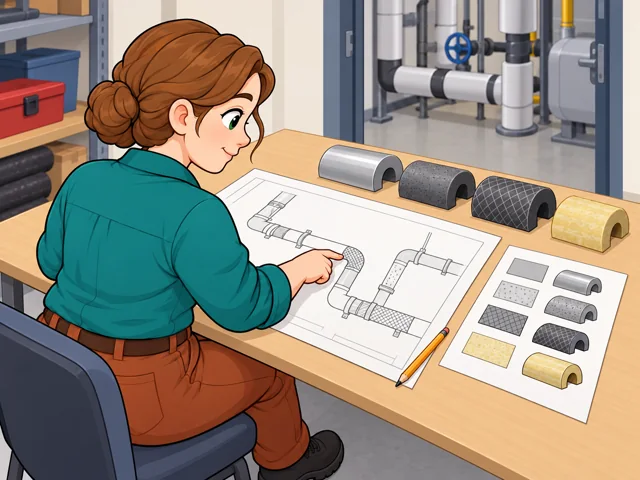
1A mechanical insulation installer traces a pipe drawing while comparing specification symbols with insulation samples.

Read the piping drawing

Check the piping drawing and specs to see which insulation goes on which surfaces.
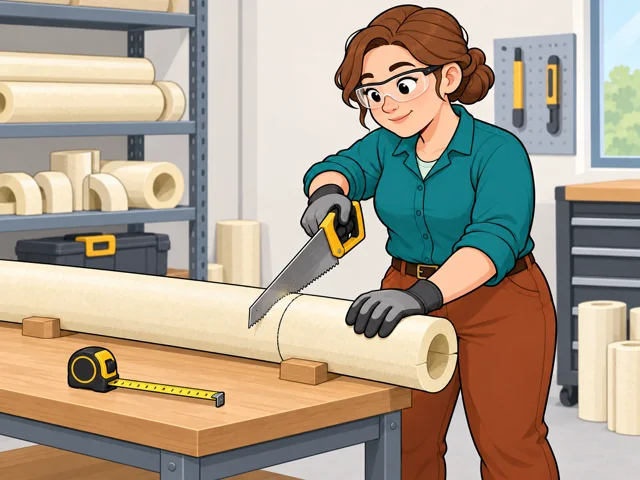
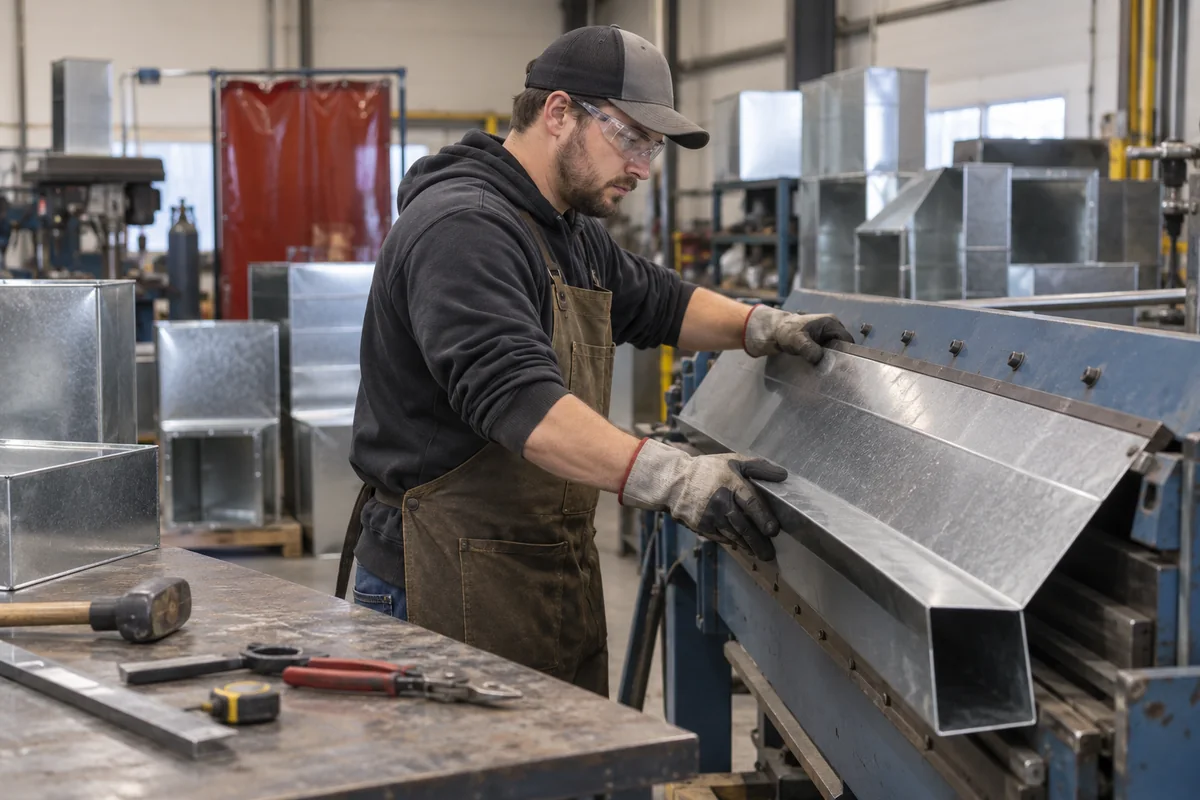
2The installer cuts a measured section of pipe insulation at a workbench, with a tape measure beside the material.

Measure, then cut to fit

Take measurements with a tape measure first, then cut each piece with a handsaw or knife to fit.
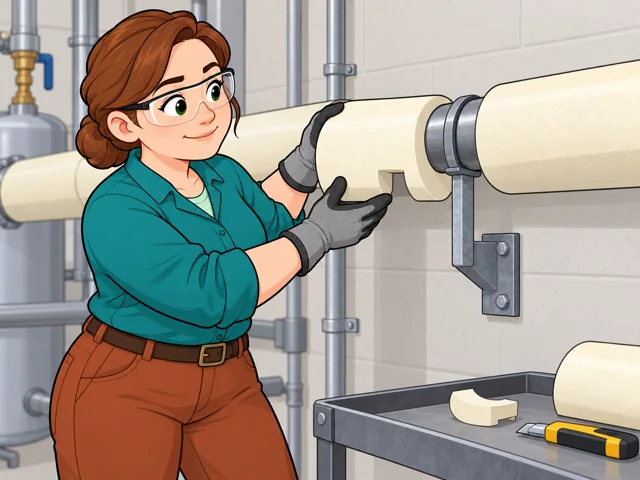
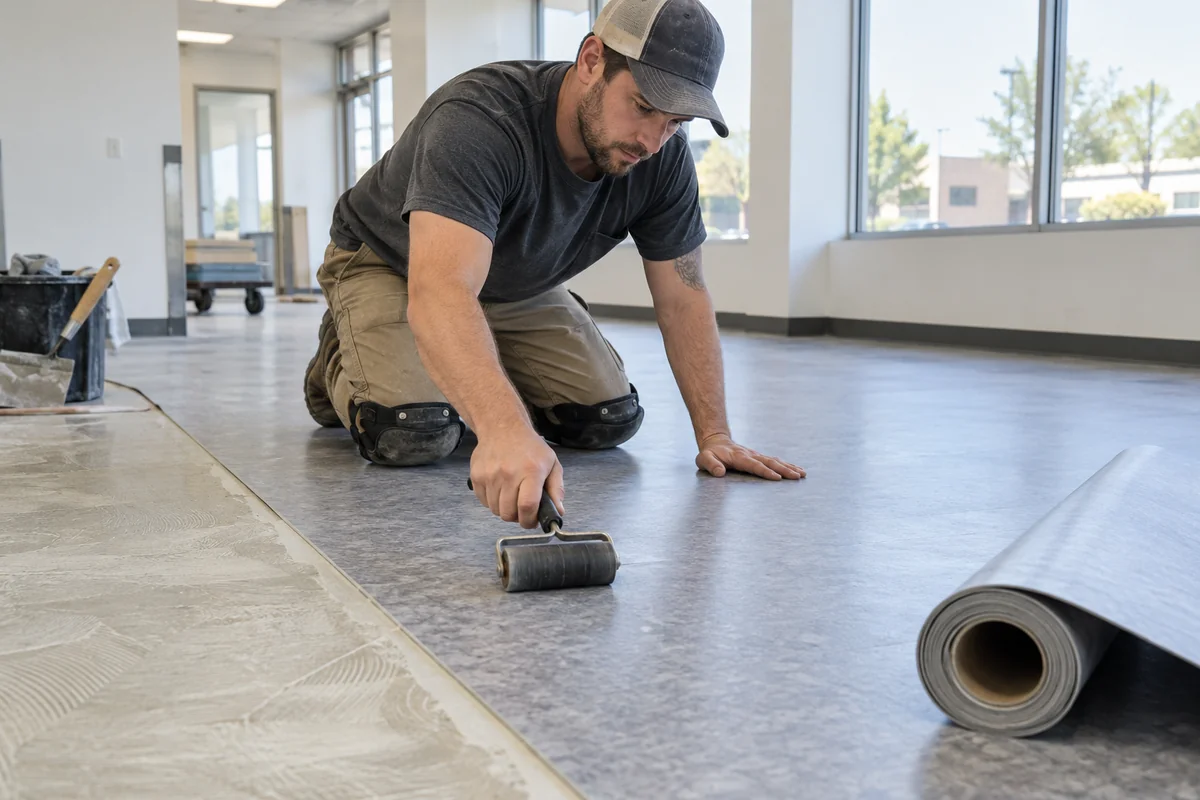
3The installer checks a reshaped insulation section around a pipe support bracket, aligning the notch with the obstruction.

Shape a piece around brackets

Where a bracket or other object interrupts the pipe, reshape the piece to fit around it.
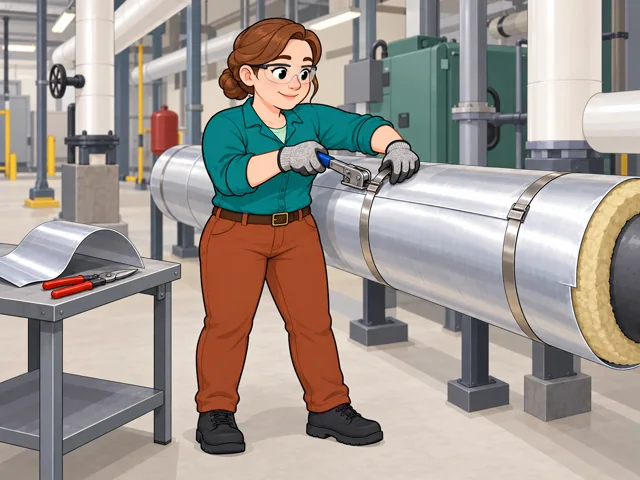
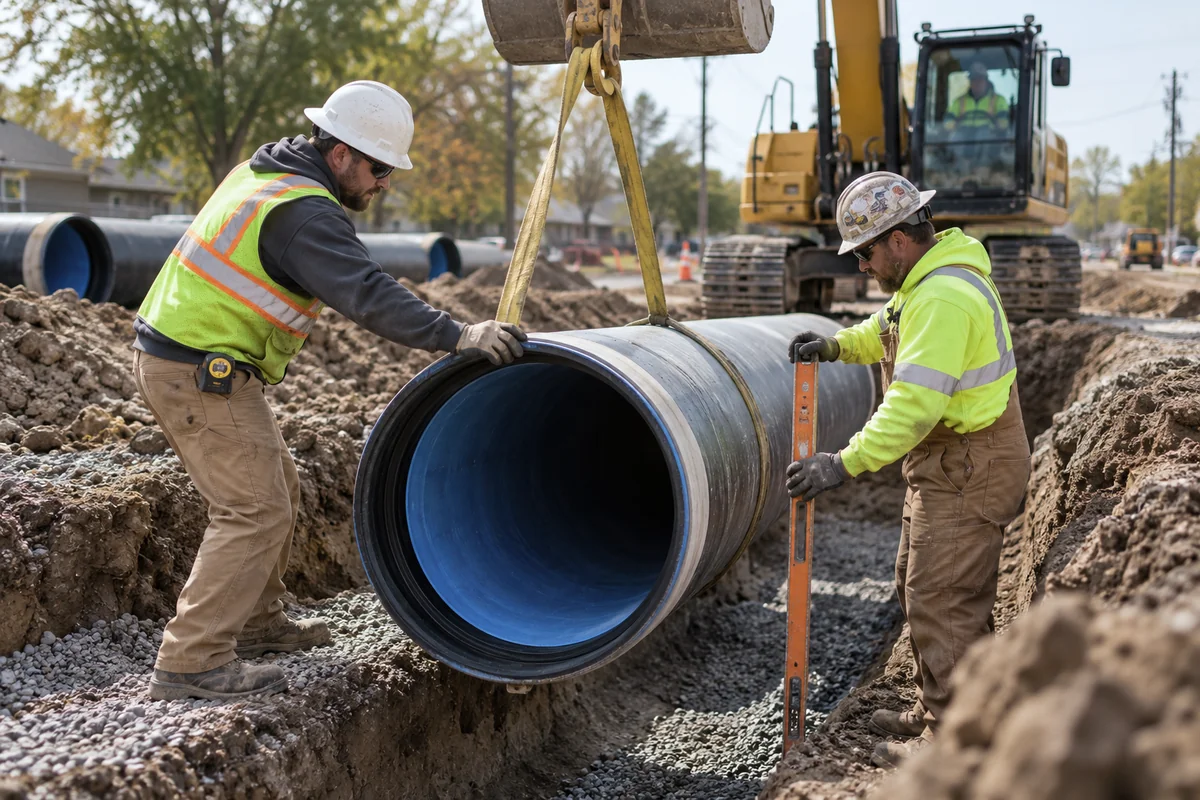
4The installer tightens a metal band around a formed protective jacket covering the pipe insulation.

Add a protective jacket

Make a protective jacket and attach it over the insulation to guard the finished layer.

Quick facts

Pay

$58,340

Median/year · 2025

Outlook

5.1% growth

1,800 openings/yr

Projected · 2025–35

Preparation

High school

+ apprenticeship

Quick orientation

Preparation, pay & outlook

Preparation

High school + apprenticeship

A high school diploma or equivalent followed by apprenticeship is the typical preparation.

Geography
United States
Period
2025

Pay

$58,340/year

National median for mechanical insulators; $28.05 an hour.

Geography
United States
Period
2025

Outlook

5.1% projected growth

About 1,800 openings a year nationally, averaged over 2025–2035.

Geography
United States
Period
2025–2035

Fit, tradeoffs & changing tools

Things to weigh

  • Ladders, cramped spaces, and repeated climbing can make careful work physically tiring; some jobs also expose you to harsh weather.
  • Construction deadlines can mean longer workweeks.

Where AI may help

Planning software such as 3E Plus can calculate insulation thickness and estimated energy savings from the measurements and material information entered.

What people still lead

You still have to make the covering fit the actual equipment and obstructions.

What we can’t predict yet

How much future automation can handle irregular fitting in cramped spaces remains an open question.

Pay in context

Earnings

The national median is $58,340 a year, or $28.05 an hour. Half of mechanical insulators earn more and half earn less.

The national spread

The 10th-percentile wage was $42,470 and the 90th-percentile wage was $100,220 annually. These describe the workforce, not starting and senior pay grades.

Geography
United States
Period
2025
Pay basis
Annual wage percentiles for mechanical insulation wage and salary workers

Employer type matters

Mechanical insulators' annual medians were $57,920 at building equipment contractors, $56,660 at drywall and insulation contractors, and $59,800 at other specialty trade contractors.

Geography
United States
Period
May 2025
Pay basis
Median annual wages by employer industry

Pay during training

Apprentices start below fully trained insulators and earn more as their skills develop.

Geography
United States
Period
Not stated
Pay basis
Apprentice pay progression; no universal starting rate

Openings over the decade

Employment is projected to grow 5.1%, with about 1,800 openings annually, including replacement needs. That is a national projection, not a count of jobs available near you.

Geography
United States
Period
2025–2035
Pay basis
Employment projection, not compensation

Getting started

Enter an apprenticeship

Typically 4–5 years.Paid
What the route involves
Combine classes with paid installation work alongside experienced journey workers.
What it can lead to
Completing the apprenticeship leads to journey-level status.
What to check
A high school diploma or equivalent is typically required; check the sponsor's admission requirements.

Start as a helper

What the route involves
Work alongside insulators as a helper before entering formal apprenticeship.
What it can lead to
You gain experience of the work before taking on the full training commitment.

Union programs and individual contractors offer apprenticeships.

After entry

Career paths

This starts where the entry routes leave off: early work, growing capability, and advancement or specialization.

  1. Get established

    Build accuracy in cutting, applying insulation, and making protective covers. Use feedback on each installation to improve the next one.

  2. Handle more of the job

    Learn to connect drawings and specifications to the finished installation, catching problems before they become a list of repairs.

  3. Lead a crew

    A foreman plans materials and daily work, teaches less experienced installers, and checks the crew's quality against the project requirements.

Where you can work

Commercial construction and retrofits

Work centers on building pipes and ducts. Drawings, material deliveries, and the construction schedule shape which areas your crew tackles next.

  • Field work
  • Physical demands

Industrial plants

Equipment and process piping bring larger, varied shapes to cover. Work can include removable covers, routine maintenance, and repairs; access may involve scaffolding or confined spaces.

  • Indoors
  • Outdoors
  • Physical demands
  • Safety-sensitive

Try it

See whether the job clicks before you commit to the path.

Measure an empty cardboard tube and make a paper covering that fits it. Add a small cardboard tab as an obstruction, then revise your covering around it. Notice whether measuring, adjusting, and getting a neat fit holds your attention.

Stay safe: Use paper, tape, and ordinary scissors—not real insulation or installed pipes.

Explore more careers

Sources

  1. O*NET OnLine. Insulation Workers, Mechanical. Accessed 2026-10-05.
  2. O*NET OnLine / U.S. Bureau of Labor Statistics. National Wages: Insulation Workers, Mechanical. Accessed 2026-10-05.
  3. U.S. Bureau of Labor Statistics. Occupational projections and worker characteristics, 2025–2035. Accessed 2026-10-05.
  4. U.S. Bureau of Labor Statistics. Insulation Workers: Occupational Outlook Handbook. Accessed 2026-10-05.
  5. Heat & Frost Insulators Local 82 Joint Apprenticeship Training Committee. Local 82 Apprenticeship Program. Accessed 2026-10-05.
  6. North American Insulation Manufacturers Association. 3E Plus Software. Accessed 2026-10-05.
  7. National Insulation Association. 6 Core Competencies for Mechanical Insulation Site Foremen. Accessed 2026-10-05.
  8. Commercial Insulation Company. Commercial Insulation. Accessed 2026-10-05.
  9. Commercial Insulation Company. Commercial, Industrial, and Marine Insulation. Accessed 2026-10-05.

Your message goes to the Great Jobs team. How we use your information