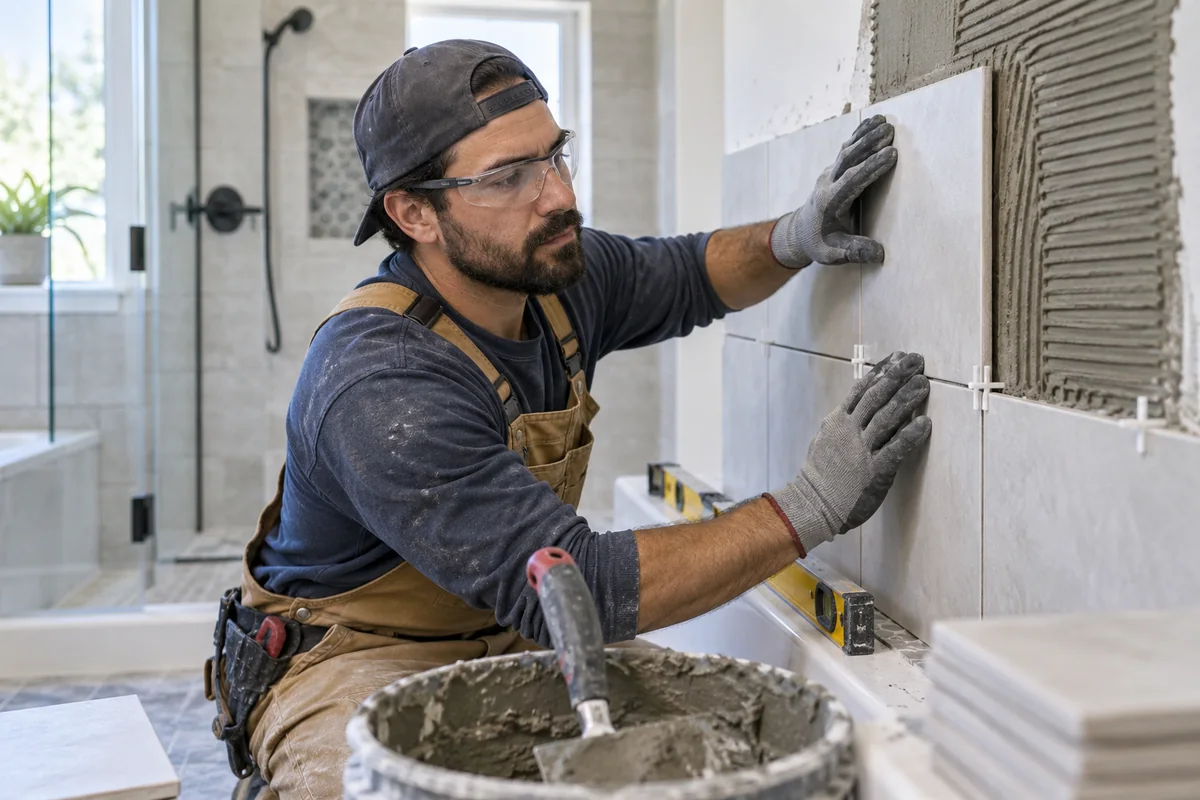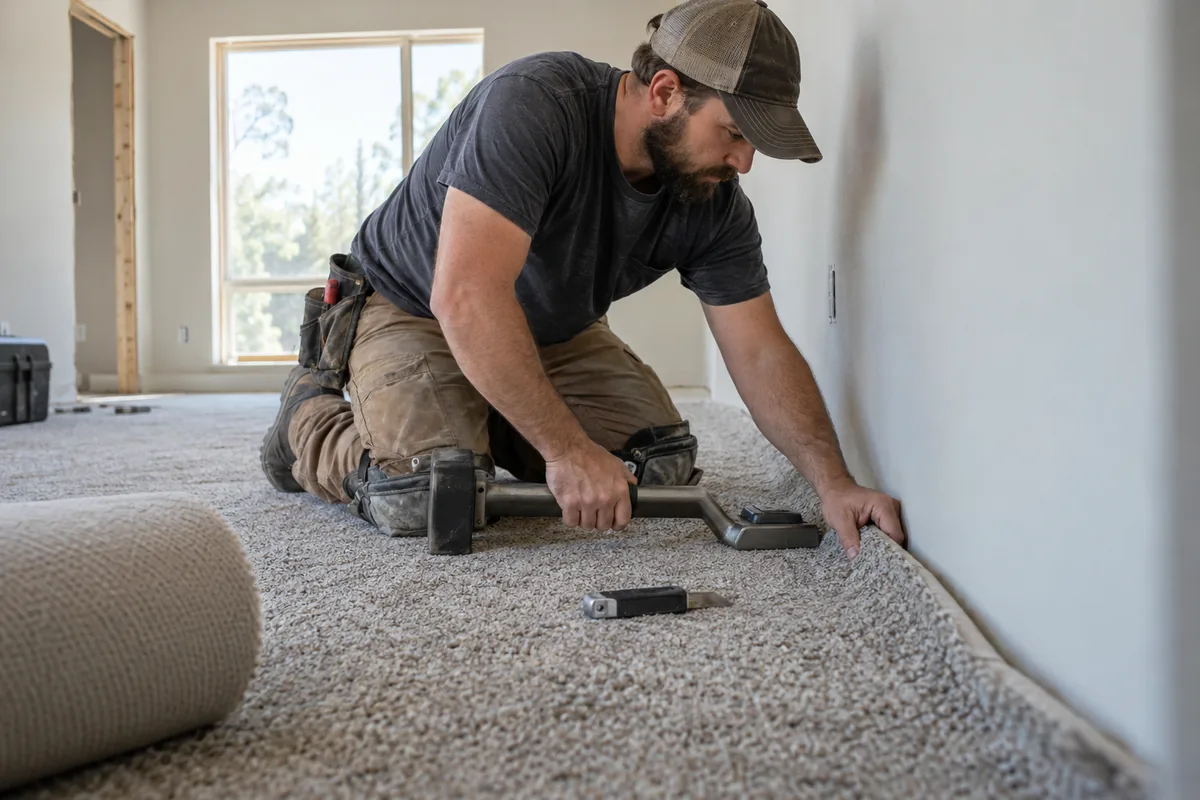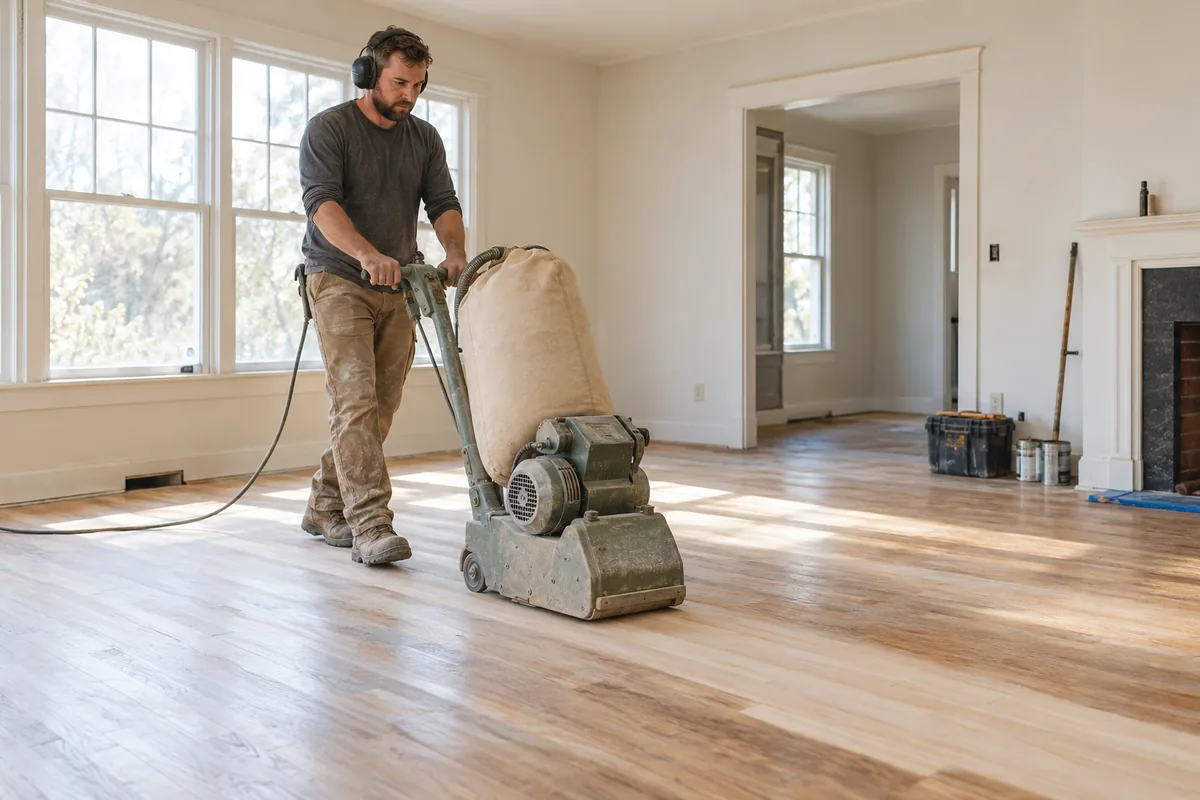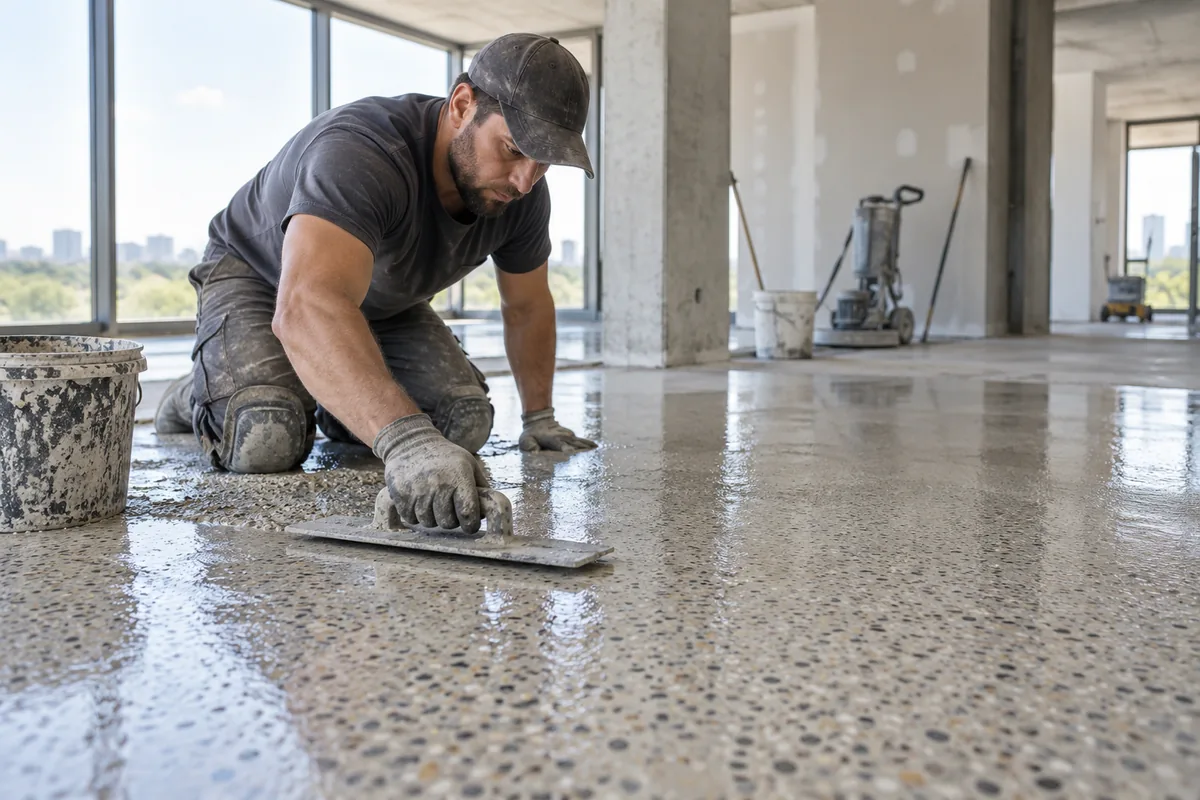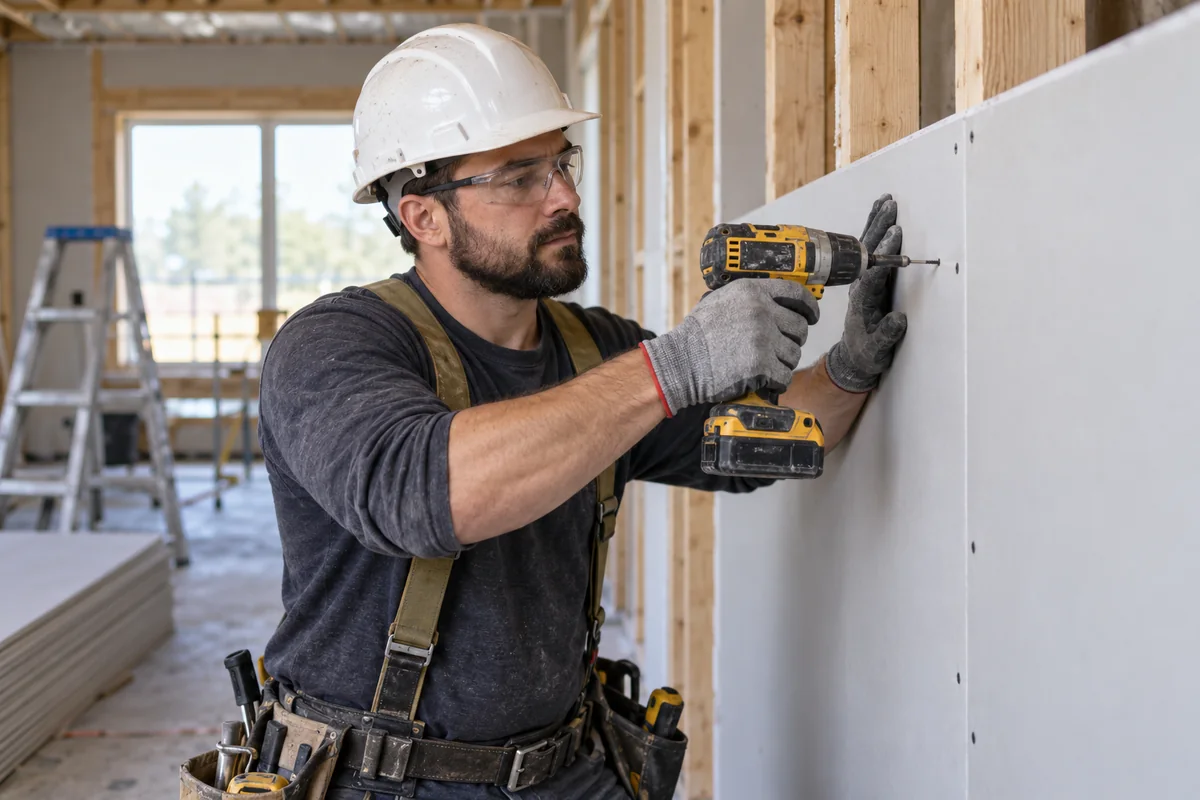
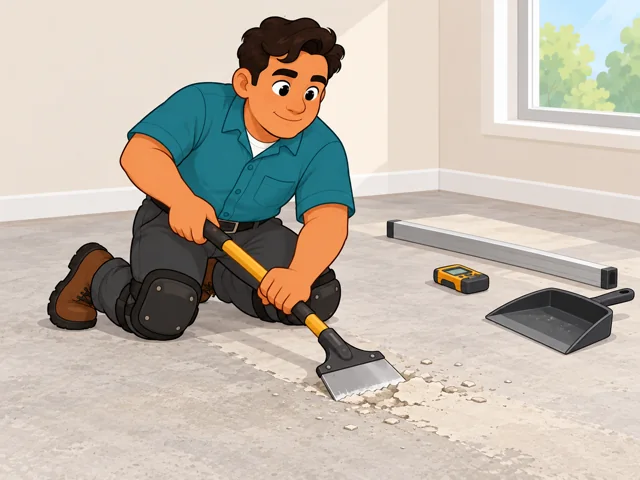
Check and scrape the subfloor
Check that the subfloor is solid and dry, then scrape off bumps that would show through the covering.
Career profile
Floor layers install resilient linoleum or vinyl, laid as flexible rolls, sheets or single tiles.
Long after you pack up your tools, a clean cut at a doorway or a tight seam still shows how carefully you worked.
Check that the subfloor is solid and dry, then scrape off bumps that would show through the covering.
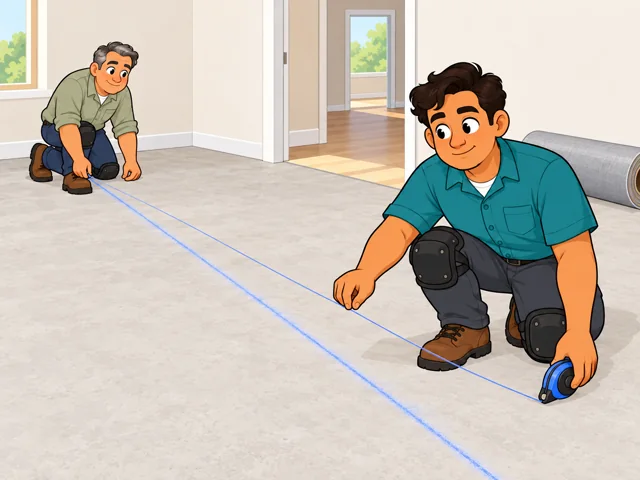
Choose seam spots based on where people walk, then snap straight guide lines with a chalk line.
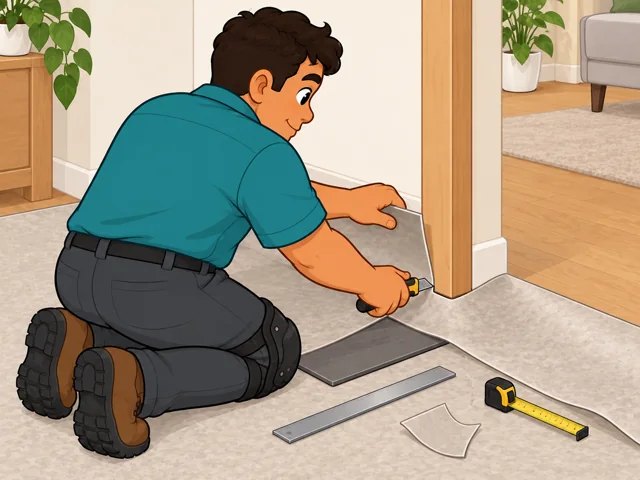
Measure and cut around anything in the way, like a doorway, then trim edges for a snug fit.
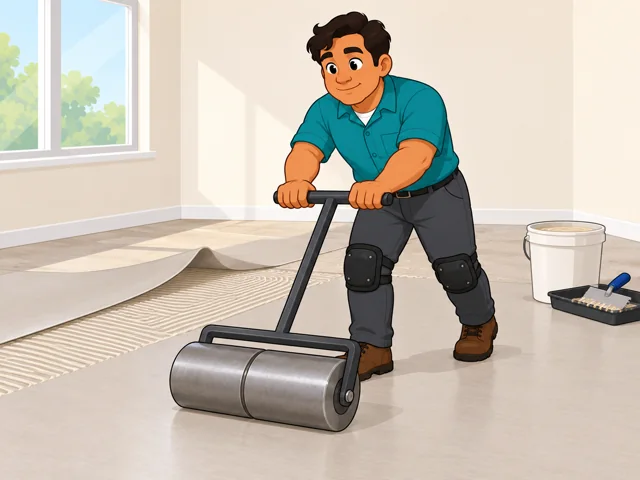
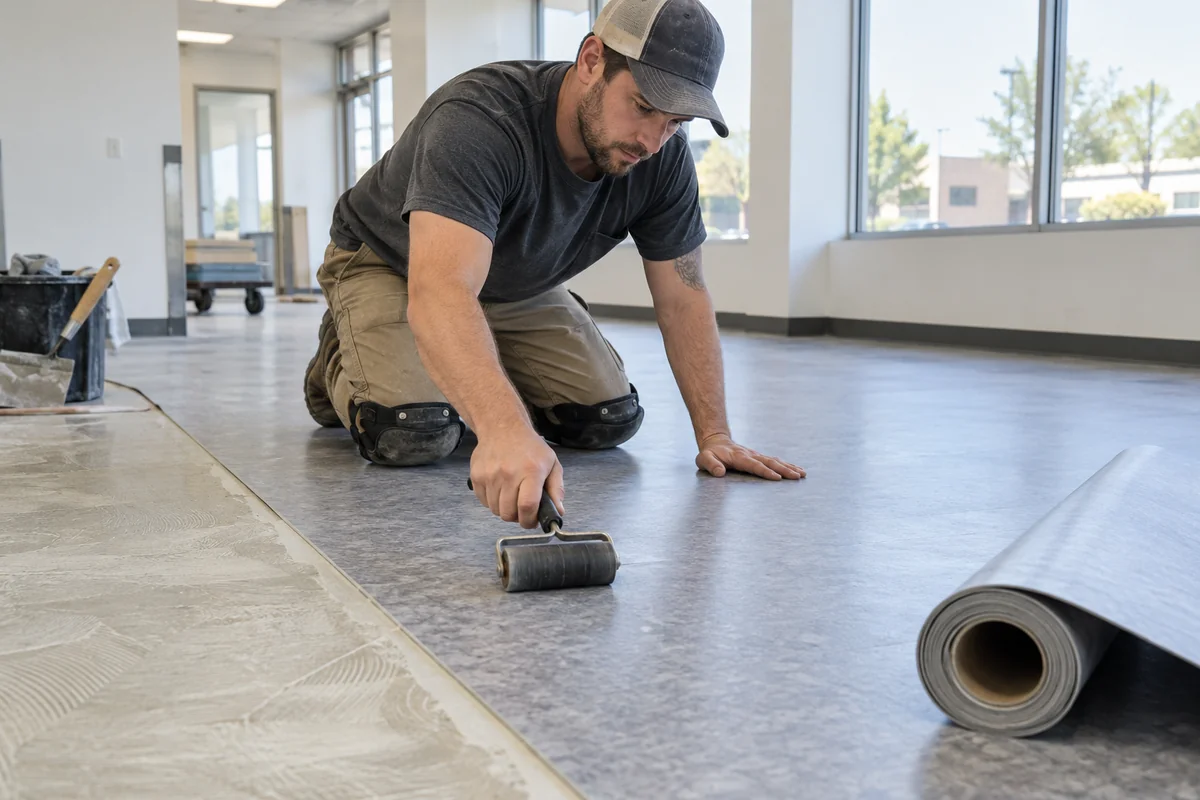
On glued-down jobs, spread glue, set the sheet in place, and press it flat with a roller.
Quick orientation
Floor layers typically enter without a formal educational credential and learn through work. Individual employers and training programs may set additional requirements.
About $27.15 an hour. These 2025 wages cover the broader floor-layer occupation, not resilient installers alone.
The broader floor-layer occupation projects about 2,200 openings a year during 2025–2035.
Flooring software can calculate material quantities and generate seam diagrams before cutting starts.
You still inspect the base and fit the material.
How much layout planning software will take over remains uncertain, especially when actual room conditions require changes.
Pay in context
Use these national figures as a benchmark: the floor-layer category also includes laminate and some manufactured-wood installation.
In 2025, the median was $56,460 a year, or $27.15 an hour. The 10th-percentile wage was $37,600 and the 90th was $96,700. Those are positions in the wage distribution, not beginner and experienced pay rates.
The broader occupation projects 9% employment growth and about 2,200 openings annually during 2025–2035. Openings include replacing workers who leave the occupation, so they are not all newly created jobs.
You can learn beside an experienced installer or enter a structured apprenticeship.
After entry
This starts where the entry routes leave off: early work, growing capability, and advancement or specialization.
Build reliable habits in surface preparation and straight layouts before taking on more complicated rooms.
Learn sheet-flooring details and heat welding, which joins suitable seams with heat and welding rod.
With experience, you may become a leadperson or foreman overseeing other installers.
Move-out damage can mean replacing or repairing resilient flooring before the next tenant arrives. Tight turnover deadlines shape the work.
Some renovations proceed in sections and overnight while patients remain nearby. You coordinate around other trades and follow the facility’s infection-control precautions.
Try it
Draw a room with a doorway and one awkward corner. Use paper strips to represent sheet vinyl, then compare two layouts for seam placement and leftover material. Notice whether you enjoy adjusting the plan for a cleaner fit.
Stay safe: Keep this a tabletop paper exercise; leave existing flooring undisturbed.
Keep exploring