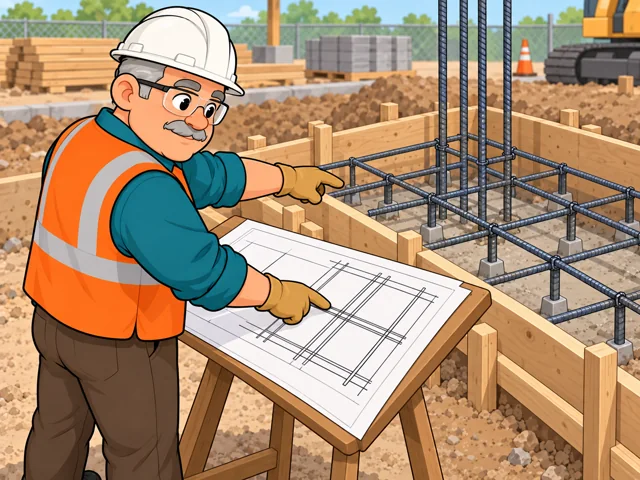
Work from the placing drawing
Work out from the placing drawing where each bar sits in the concrete form, and how far apart.
Career profile
Rebar workers build the steel framework set inside concrete to make it stronger.
Before the concrete pour, you set bars, supports and wire ties to match a drawing. Gaps between pieces matter as much as steel placement.
Work out from the placing drawing where each bar sits in the concrete form, and how far apart.
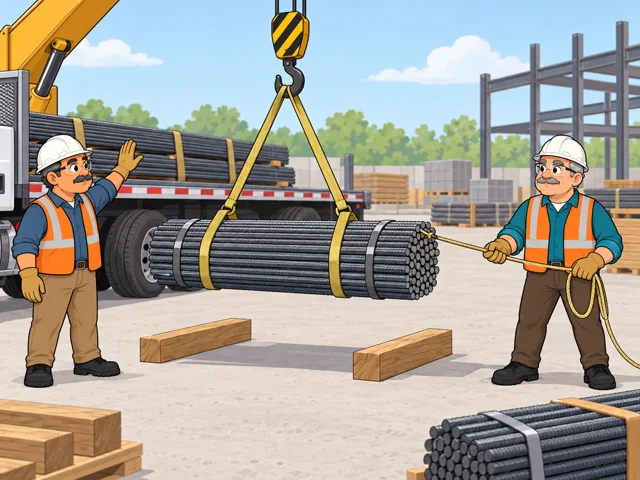
Unload the rebar delivery, then team up to move it by forklift or crane to where it goes.
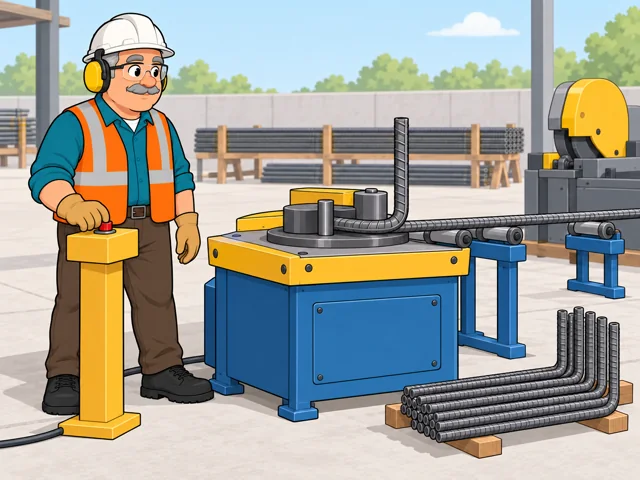
Cut bars to length with a bar cutter, and use bending tools for the shapes the job needs.
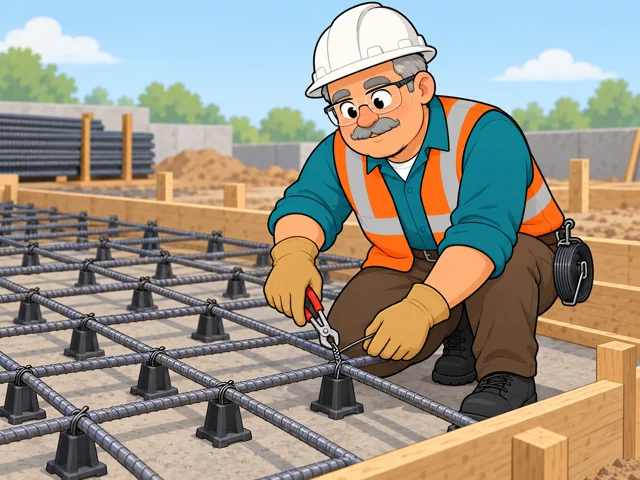
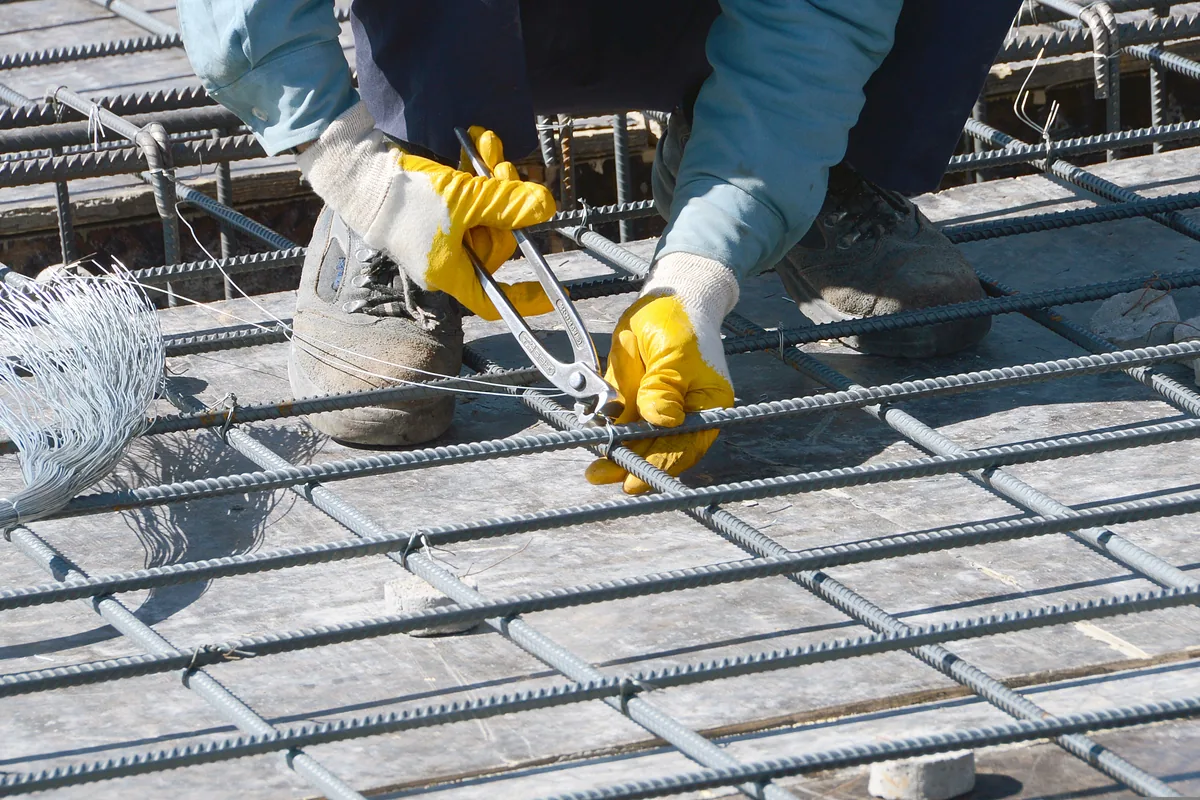
Wrap wire where bars cross and twist it with pliers so the framework stays where it's set.
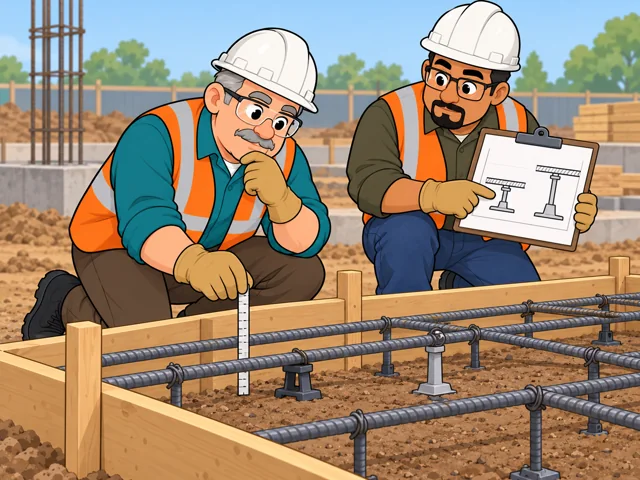
If one bar sits low, check its support against the drawing so concrete can surround and shield it.
Quick orientation
A diploma or equivalent is typical; apprenticeship builds the trade skills.
National median for reinforcing iron and rebar workers: $28.35 an hour.
About 1,000 openings annually are still projected nationwide.
On some bridge decks, a robot finds crossing bars and ties them automatically, taking over a portion of repetitive tying.
Crews still handle installation the robot does not cover. A robot supervisor monitors its work and reloads tie wire.
How much hand tying will remain depends partly on whether machines can move beyond broad, horizontal layouts into walls, columns, and more crowded arrangements.
Pay in context
The median is the midpoint of employee wages, not a starting offer.
The lowest-paid tenth earned below $43,310 annually; the highest-paid tenth earned above $104,540. These are wage percentiles, not career stages.
Annual medians were $64,010 in nonresidential building construction, $62,460 in heavy and civil engineering construction, and $57,880 with foundation, structure, and building exterior contractors.
Employment is projected to fall 5.3% over 2025–2035, with about 1,000 openings a year on average. National openings do not tell you which contractors are hiring locally.
You can learn through apprenticeship or employer training.
After entry
This starts where the entry routes leave off: early work, growing capability, and advancement or specialization.
Build accuracy in routine placements, keep the work area organized, and communicate with your foreman when a drawing or bar location is unclear.
Work toward interpreting placement drawings with less help, checking bar sizes, spacing, and overlaps before moving on.
With experience, pursue foreman work coordinating placements and directing other workers.
The geometry changes from flat floor reinforcement to vertical walls and columns. You work out how bars and supports fit each part of the building.
Crews may pre-tie reinforcement for footings and columns, then install deck and barrier steel. Outdoor conditions and work at height shape the day.
Try it
Draw a small grid with equal spacing, then recreate it using paper straws and short pieces of yarn at the crossings. Check the spacing afterward. Notice whether you enjoy the mix of repeated handwork and small corrections.
Stay safe: Keep this a tabletop exercise; it is not a structural model or practice with real rebar.
Keep exploring