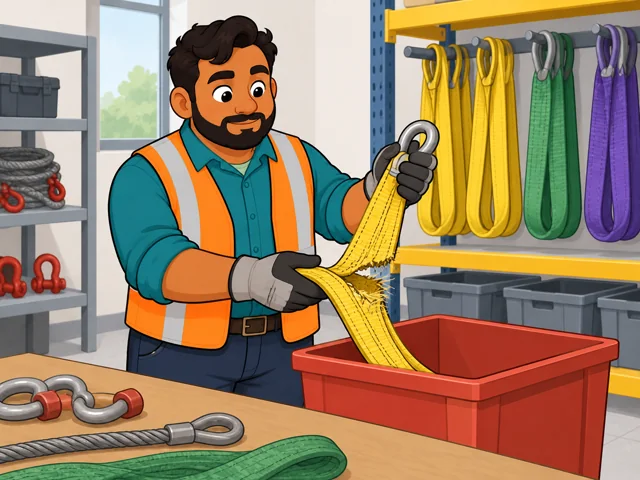
Inspect a sling before lifting
Check a sling and its hardware for damage and pull any faulty pieces from use.
Career profile
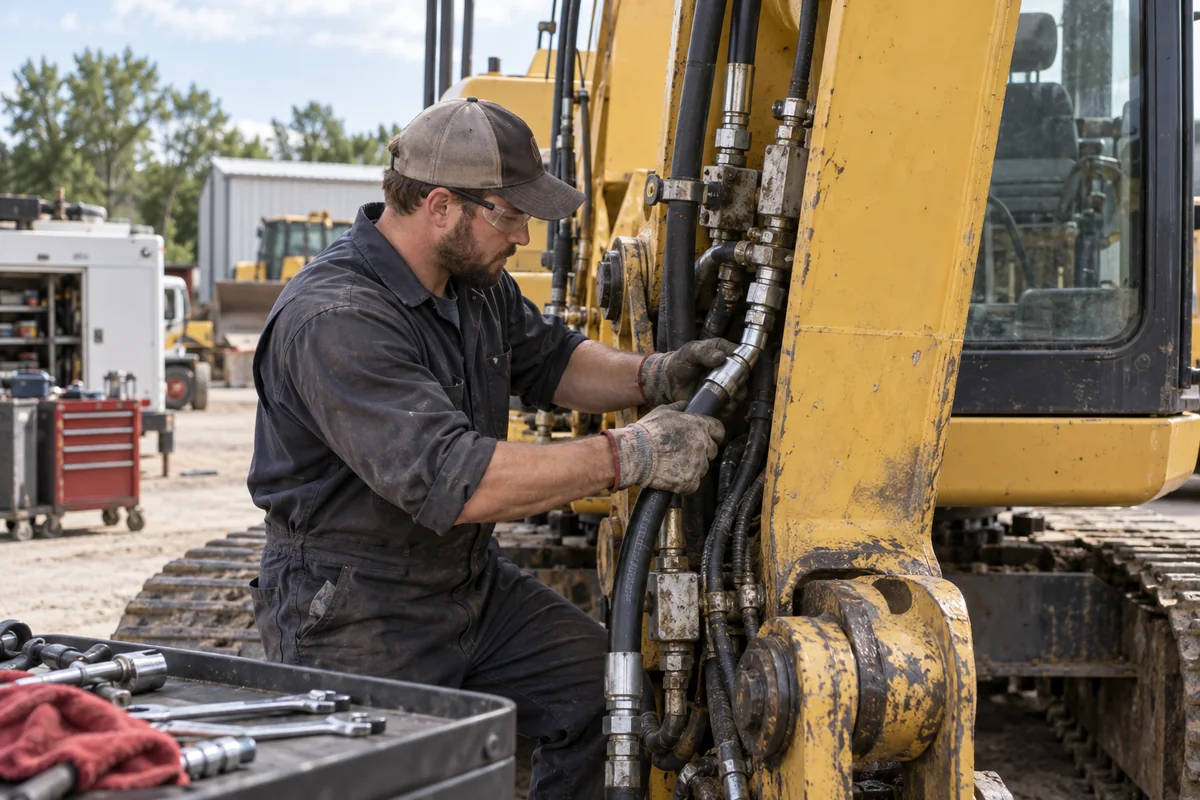
Riggers choose and attach gear so a team can lift, turn and place heavy loads.
Sometimes the job means moving a machine through a gap it barely fits. You plan the path it takes and help guide it along.

Check a sling and its hardware for damage and pull any faulty pieces from use.
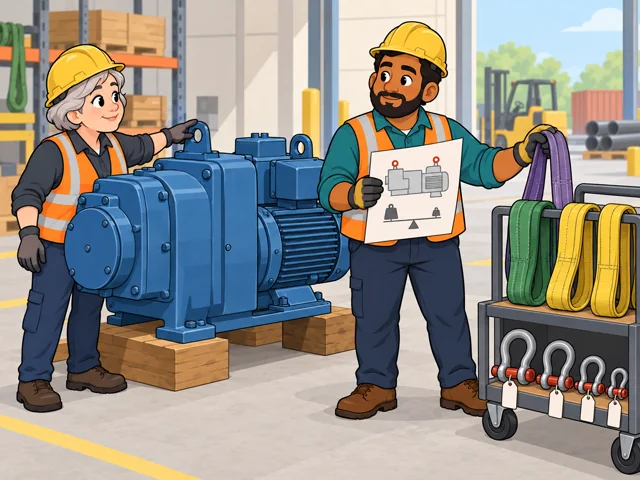
Learn the load's weight, balance point and pickup spots, then choose slings and hardware rated to carry it.
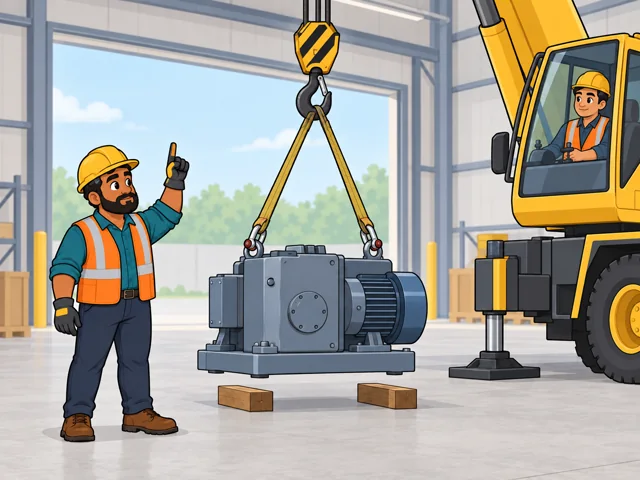
Attach the load to the rigging and signal the crane operator through each move into place.
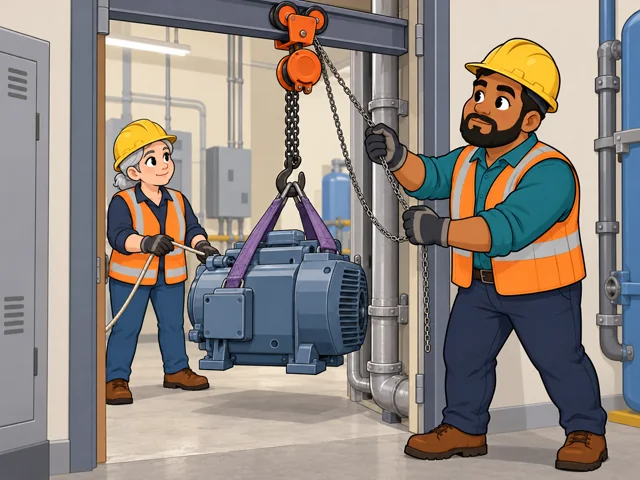
Run a chain hoist to guide a heavy machine past obstacles and through a narrow opening under control.
Quick orientation
Typical entry preparation is a high school diploma or equivalent, followed by moderate-term on-the-job training.
National median for riggers in 2025; about $30.12 an hour.
About 1,700 openings a year are projected nationally during 2025–2035.
In entertainment rigging, software such as Braceworks calculates forces in a drawn setup and flags overloaded or disconnected components.
You still inspect the actual equipment, make connections, and communicate with the people moving the load.
How much planning becomes automated depends partly on whether a digital model captures the real setup. Handling irregular loads in changing spaces remains a harder problem than checking a drawing.
Pay in context
The national median is a useful reference, but it is not a starting offer.
In 2025, riggers’ median annual wage was $62,640—about $30.12 per hour on a 2,080-hour basis. The lowest-paid 10% earned $40,680 or less; the highest-paid 10% earned $97,850 or more. Those groups are not experience levels.
At Newport News Shipbuilding in Virginia, the September 2026 graduate-entry rigger role advertises estimated annual base pay of $57,283.20–$62,067.20. Final pay depends on qualifications and other job factors and may differ from that range.
National employment is projected to rise 3.9% during 2025–2035, with about 1,700 openings annually. Openings include replacing workers who leave the occupation, not just newly created positions.
You can enter through a job that teaches rigging or through a structured apprenticeship. A college degree is not the typical starting requirement.
After entry
This starts where the entry routes leave off: early work, growing capability, and advancement or specialization. This path also has a credential or licensing boundary; see the requirements and limits.
Build consistency with gear inspections and basic connections when the load and rigging arrangement are already known.
Develop the calculations needed to find a load’s balance point and choose lifting points and gear.
Build toward planning rigging for loads that must rotate or change orientation, selecting the configuration and accounting for forces as the load moves.
Move pumps and machinery into ships or help lift entire ship sections. Tight compartments and work at height shape the job; some yards require rotating shifts or overtime.
Coordinate with crane and installation crews as structural components move into place. The work includes hooking, guiding, and making initial connections around a load’s fall zone.
Try it
Sketch a bulky machine, a narrow doorway, and its destination on paper. Mark a possible route, then list what you would need to know about weight, balance, clearance, and lifting points before planning the move. Notice whether finding those missing details interests you.
Stay safe: Keep this a paper exercise; do not lift or suspend objects to test the plan.
Keep exploring