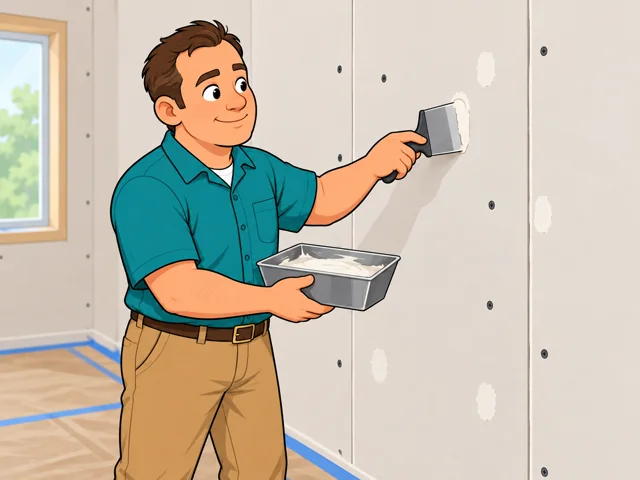
Cover screw heads and holes
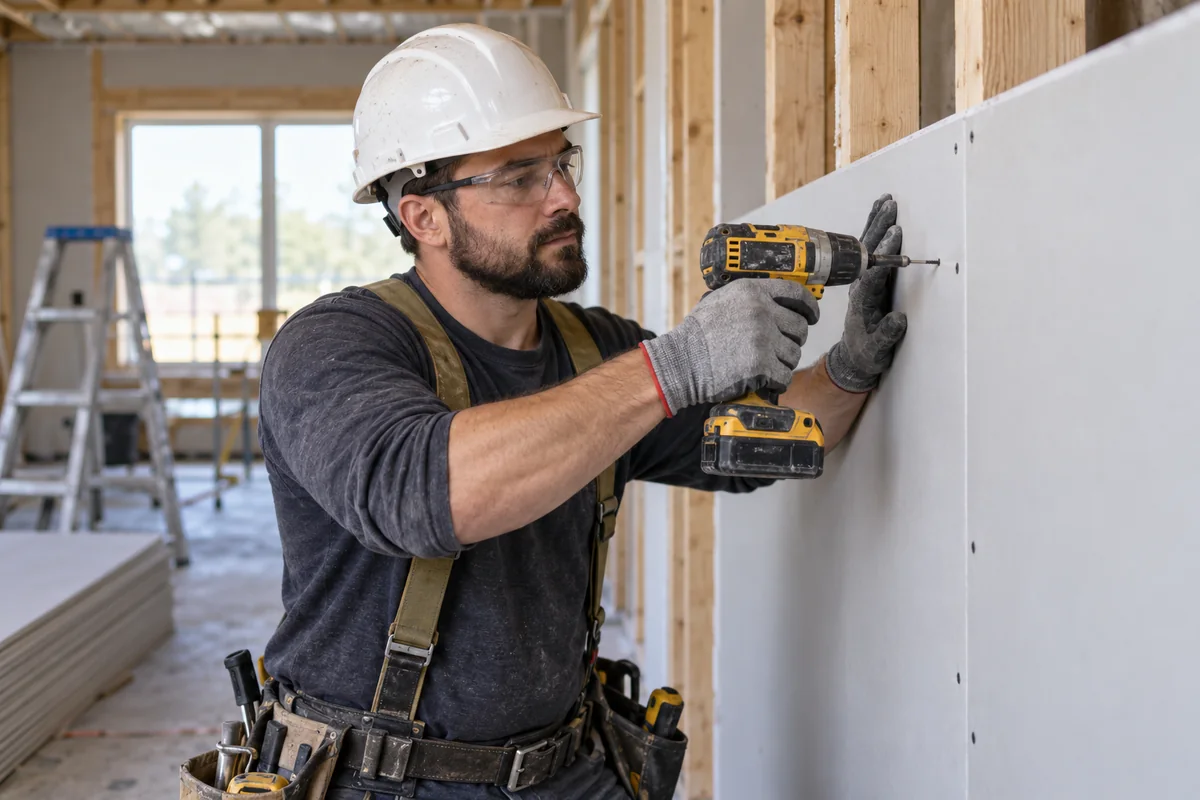
Spread joint compound over screw heads, other fasteners, holes and small gaps with a broad knife.
Career profile
Tapers turn separate drywall sheets into one even surface ready to be painted.
You press tape into seams and smooth compound with a broad knife. Slight changes in hand pressure show on the finished wall.
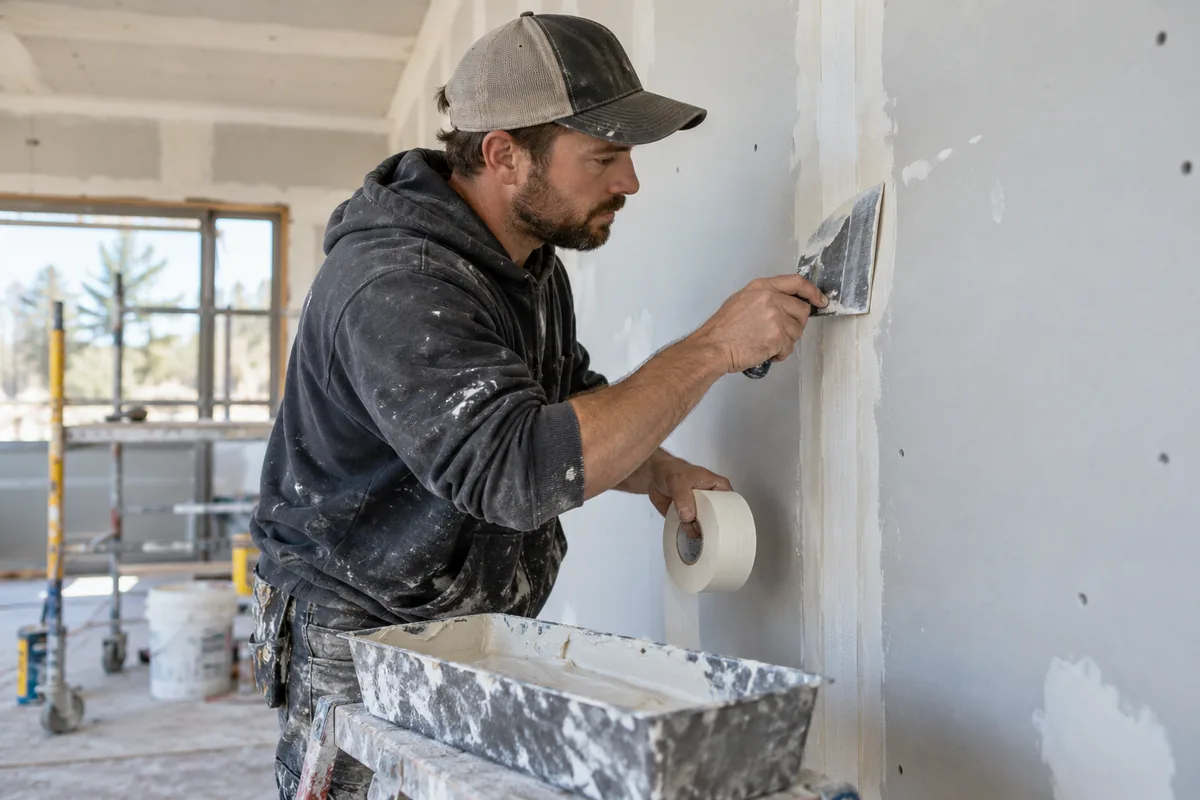
Spread joint compound over screw heads, other fasteners, holes and small gaps with a broad knife.
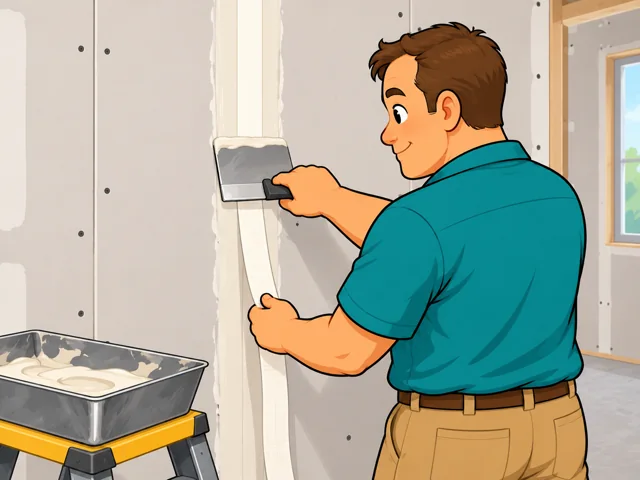
Where sheets meet, set paper tape into wet compound, press it in, then flatten it down the seam.
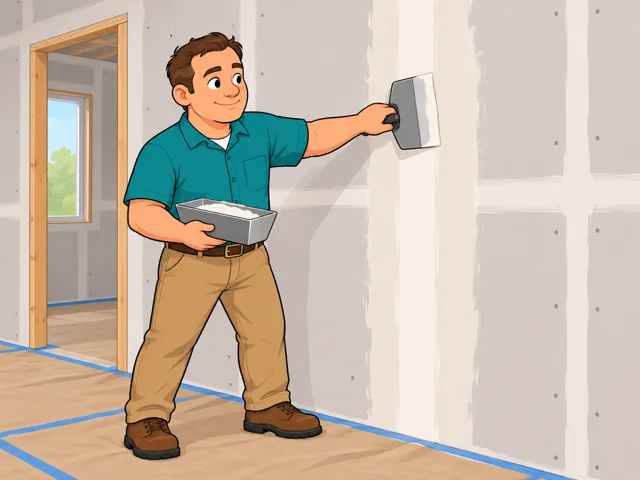
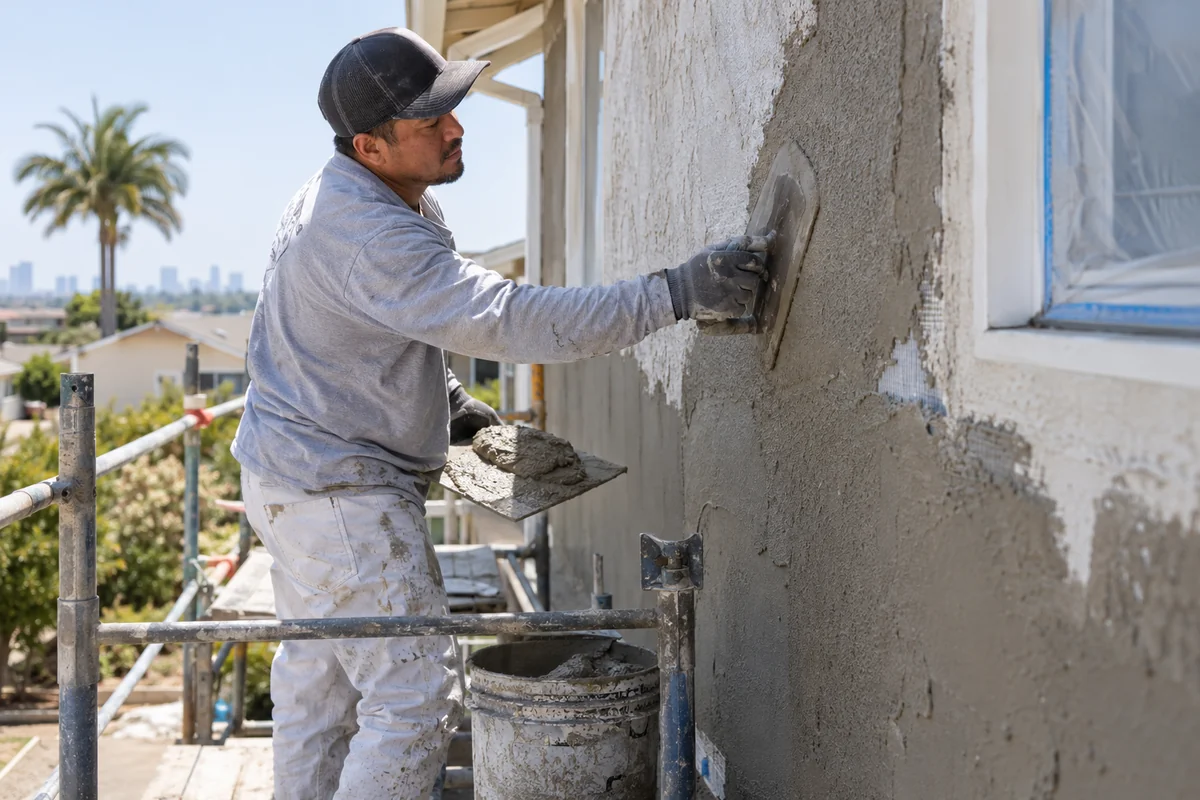
Lay more compound past the tape edges so the bump slopes gently and evenly into the flat wall.
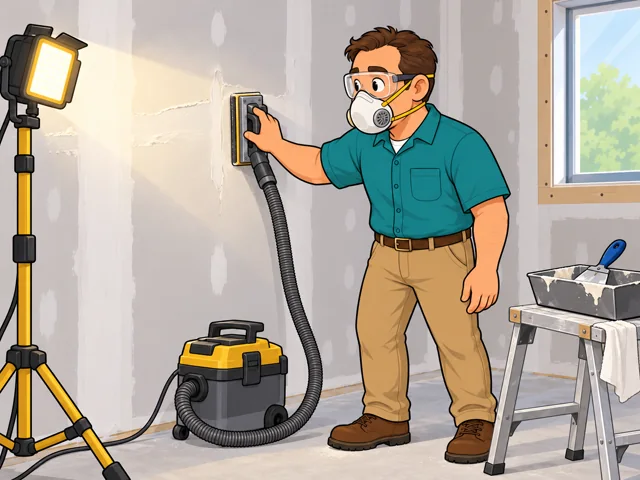
Once the compound dries, look it over, sand ridges and fill leftover flaws before the wall is decorated.
Quick orientation
No formal educational credential is typically needed to enter; employers and apprenticeships may set their own requirements.
National median for tapers, equivalent to $32.82 an hour.
About 900 openings a year are projected nationally for tapers, even as total employment declines.
Mechanical applicators can lay tape and compound together. Sanders that collect dust help with cleanup and exposure control.
You still choose materials, handle corners, and judge whether the surface needs another pass.
How much more finishing equipment will take over—and how that changes crew size and daily tasks—remains uncertain.
Pay in context
The national median for tapers was $68,270 a year, or $32.82 an hour, in May 2025.
The lowest-paid 10% earned below $43,670; the highest-paid 10% earned above $107,110. These are wage percentiles, not beginner and experienced rates.
Median taper pay was $70,830 at drywall and insulation contractors, $68,140 in nonresidential building construction, and $58,370 at painting and wall covering contractors.
Employment is projected to fall 1.6%, with about 900 openings annually on average. Openings include replacing people who leave the occupation.
You can learn after hiring or enter a structured apprenticeship.
After entry
This starts where the entry routes leave off: early work, growing capability, and advancement or specialization.
After joining a crew, practice leaving smooth tape joints and evenly filled fasteners.
Develop your corner work, learn automatic taping tools, and plan the materials and sequence for a larger area.
With experience, you may move into supervising crews or estimating work.
At an integrated contractor, drywall finishing fits into a schedule shared with framing, ceiling, and painting crews. Coordinating handoffs is part of getting rooms finished.
You blend repairs into walls that already have a finish. Customer conversations and return visits to correct visible flaws can be part of the job.
Try it
Shine a flashlight sideways across a finished wall you have permission to inspect. Look for ridges, shallow dips, and patch edges. Notice whether finding these small surface differences interests you—the same attention matters when finishing drywall.
Stay safe: Stay on the floor and leave the wall untouched.
Keep exploring