Career profile

Carpet Installer

Carpet installers cut carpet from the roll and lay it to fit a space.

You choose where the seams will sit before you make a single cut. That choice shapes how the finished room looks.
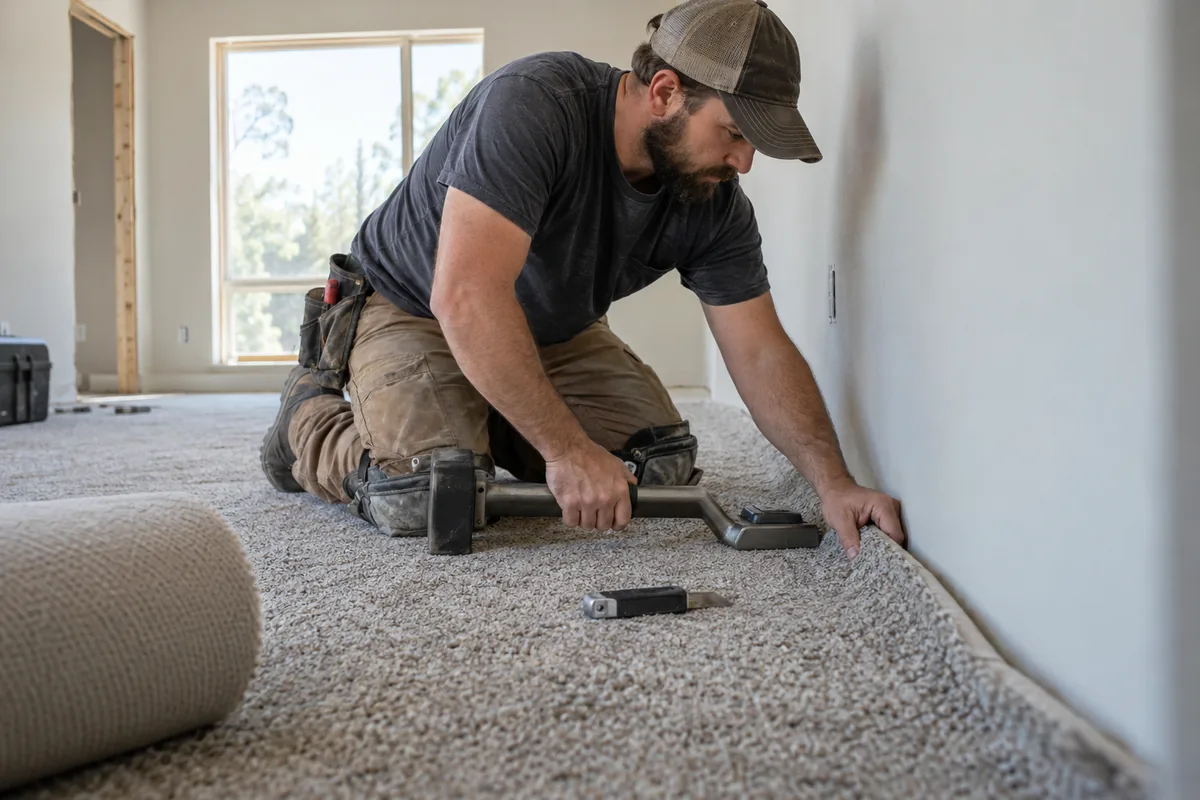
A carpet installer kneels in a living room and stretches carpet toward the wall with a knee kicker.

A day in the life

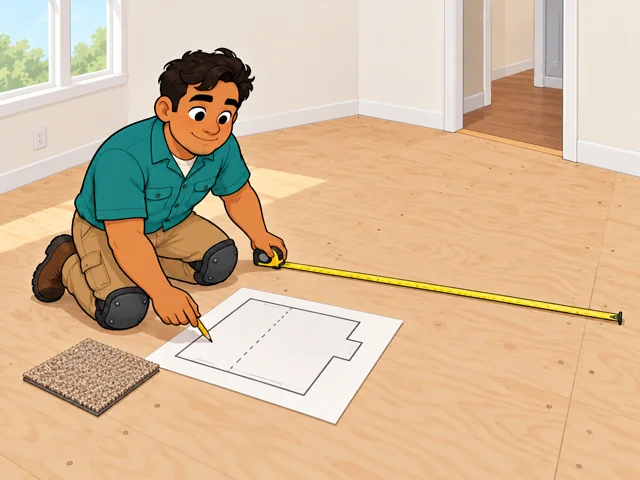
1A carpet installer measures an empty room and considers a seam location on a simple floor sketch beside the hallway entrance.

Measure and plan the seams

Measure the floor and pick seam spots, weighing where people will walk against how it will look.
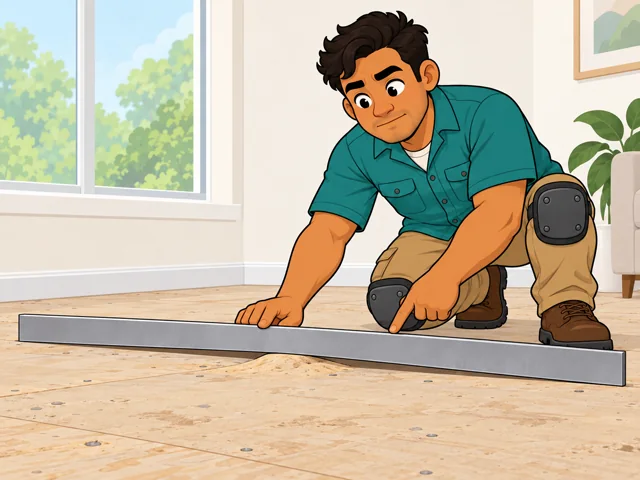
2A crouching carpet installer uses a straightedge to locate a raised patch in the exposed floor.

Scan the bare floor for lumps

Once the floor is bare, find raised spots that could show through or wear carpet unevenly.
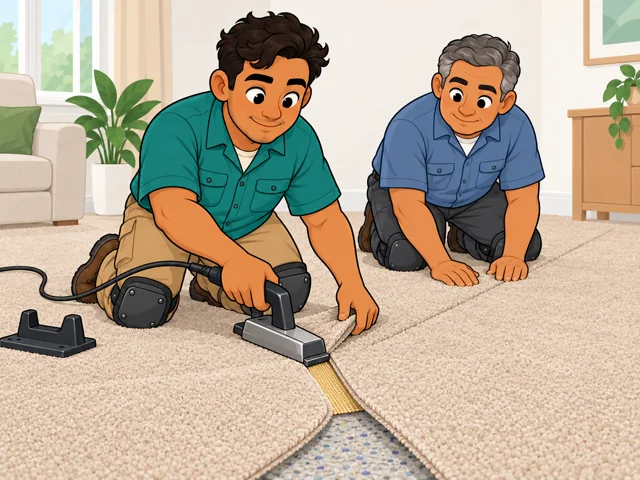
3A carpet installer heats seaming tape beneath two carpet edges while a coworker aligns and presses the edges together behind the iron.

Join pieces with seaming tape

Use seaming tape and a heated carpet iron to join two carpet edges into one piece.
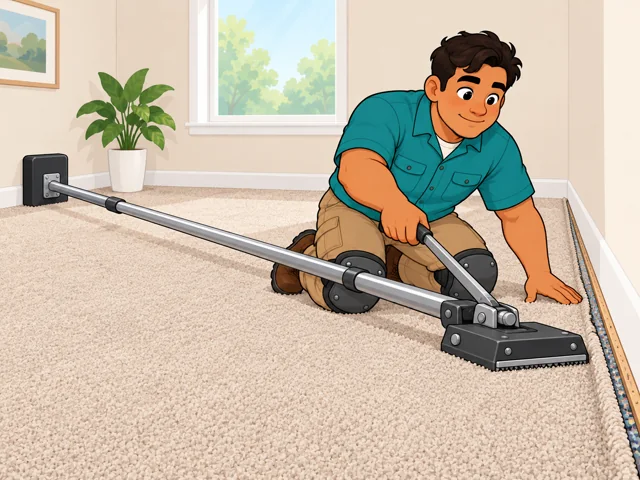
4A carpet installer operates a wall-braced power stretcher to pull the carpet smooth toward the room's edge.

Stretch the carpet toward walls

On stretched-in jobs, pull the carpet tight and smooth toward the walls with a power stretcher.

Quick facts

Pay

$50,340

Median/year · May 2025

Outlook

16.4% decline

700 openings/yr

Projected · 2025–35

Preparation

Learn on the job

Quick orientation

Preparation, pay & outlook

Preparation

Learn on the job

Typically, no formal educational credential is needed.

Geography
United States
Period
Not applicable

Pay

$50,340/year

National median for carpet installers; $24.20 an hour.

Geography
United States
Period
May 2025

Outlook

16.4% decline

Projected national employment change for carpet installers.

Geography
United States
Period
2025–2035

Fit, tradeoffs & changing tools

Things to weigh

  • Kneeling and moving heavy materials make this physically demanding.
  • Deadlines can put pressure on careful work.

Where AI may help

Flooring software can calculate material quantities and generate seam diagrams from a room plan.

What people still lead

You still check the actual floor and fit the material.

What we can’t predict yet

How much layout judgment software will take over remains uncertain, especially when the room differs from the plan.

Pay in context

Earnings

The national median is $50,340 a year, or $24.20 an hour—not a starting-pay promise.

Understand the spread

The 10th-to-90th-percentile range is $35,450–$82,140 annually, or $17.05–$39.49 hourly. These are points in the national wage distribution, not beginner and expert rates. Self-employed earnings are excluded.

Geography
United States
Period
May 2025
Pay basis
Wage and salary workers in SOC 47-2041, Carpet Installers; annual and hourly wage estimates.

Openings despite a shrinking occupation

Employment is projected to fall 16.4% from 2025 to 2035, with about 700 openings a year on average. Openings can occur as workers leave even when total employment declines.

Geography
United States
Period
2025–2035
Pay basis
Employment projection and annual average openings for SOC 47-2041; not a pay measure.

Getting started

Start as a helper

What the route involves
Move materials and learn from an experienced installer.
What it can lead to
Progress toward cutting carpet and completing more of the installation.

Enter a carpet-layer apprenticeship

Paid
What the route involves
Combine paid jobsite training with technical instruction.
What it can lead to
Completion leads to journey-worker status.
What to check
Programs may require a high school diploma or equivalent; check the sponsor's eligibility rules.

You can learn alongside experienced installers through employment or an apprenticeship.

After entry

Career paths

This starts where the entry routes leave off: early work, growing capability, and advancement or specialization.

  1. Get reliable with the basics

    Build consistent habits for handling carpet, preparing the floor and using tools correctly.

  2. Handle more difficult layouts

    Develop pattern-matching skills and learn to finish the transition where carpet meets another floor covering.

  3. Specialize in floor preparation

    Build deeper skill in checking moisture and preparing the surface beneath the carpet.

    • Train in additional flooring systems, such as resilient flooring, to broaden the installations you can handle.

Where you can work

Customers' homes

You work in someone's living space, where furniture may need moving and considerate communication matters.

  • Indoors
  • Physical demands

Commercial buildings

Offices and other businesses may need installation during evenings or weekends so regular operations can continue.

  • Indoors
  • Shift work
  • Physical demands

Try it

See whether the job clicks before you commit to the path.

Draw a room with a doorway and an alcove on graph paper. Cover it with equal-width paper strips representing carpet, then mark the seams. Try another layout: which wastes less material, and which puts fewer seams across the doorway? Notice whether you enjoy revising the fit.

Explore more careers

Sources

  1. O*NET OnLine. 47-2041.00 — Carpet Installers. Accessed 2026-10-06.
  2. U.S. Bureau of Labor Statistics. Flooring Installers and Tile and Stone Setters — carpet-relevant work and training passages. Accessed 2026-10-06.
  3. U.S. Bureau of Labor Statistics. May 2025 Occupational Employment and Wage Statistics — national estimates, SOC 47-2041; supplied pinned binding. Accessed 2026-09-29.
  4. U.S. Bureau of Labor Statistics. Employment Projections Table 1.2, 2025–2035 — SOC 47-2041; supplied pinned binding. Accessed 2026-09-29.
  5. Measure Square. Flooring Takeoff & Estimating Software — Our Products. Accessed 2026-10-06.
  6. United Brotherhood of Carpenters and Joiners of America. Floor Covering — training and curriculum. Accessed 2026-10-06.

Your message goes to the Great Jobs team. How we use your information