Mark posts and check utilities
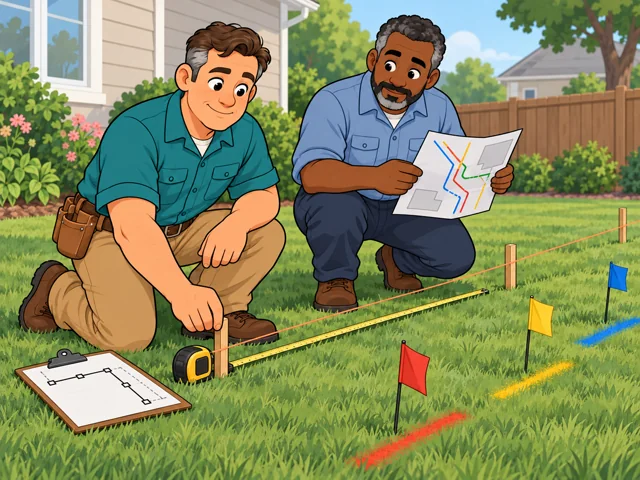
Measure from the plan drawing, mark each post spot, and look up buried utilities before digging any holes.
Career profile
Fence erectors put up and repair fences and gates, from first marks to last piece.
Your measurements turn into an actual fence. Anyone can later walk beside it and judge the work just by looking.

Measure from the plan drawing, mark each post spot, and look up buried utilities before digging any holes.
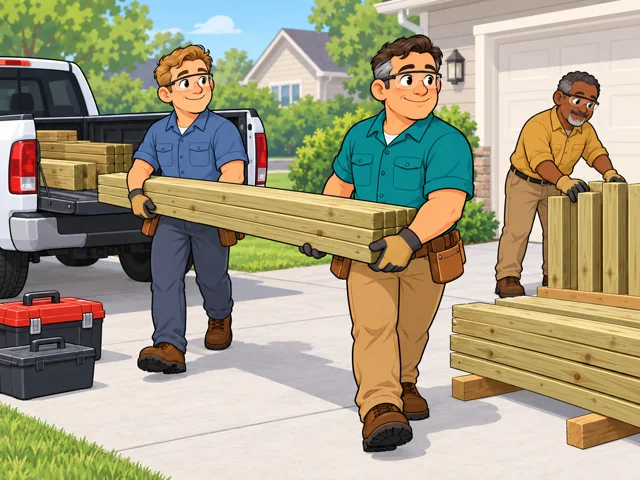
You load the truck, unload on site, and prep materials with the crew so installing can start.
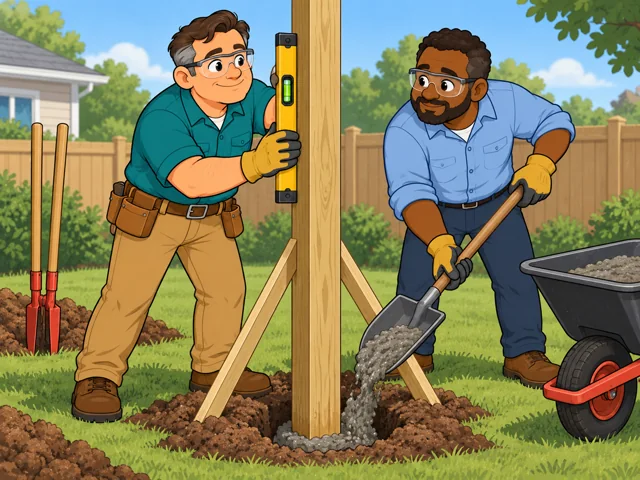
Dig holes, mix concrete, and check each post with a spirit level before locking it in place.

How you assemble depends on the material, with panels for yard fences and chain-link for security.
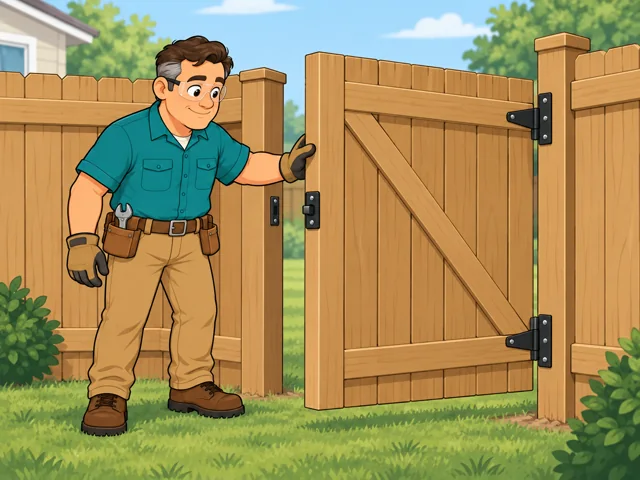
Hang the gate with hand tools, then test that it opens without sticking and shuts properly.
Quick orientation
No formal educational credential is typically needed to enter; employers provide on-the-job training.
National median for fence erectors in 2025, equivalent to $23.07 an hour.
Fence erector employment is projected to grow nationally from 2025 to 2035.
Drawing and project software can help organize layouts and job information.
You still handle materials, check alignment, and coordinate work with the crew.
How much more of the physical installation machines will handle remains uncertain, especially across different sites and fence materials.
Pay in context
The national median is a useful benchmark for employee wages, not a starting offer or the revenue of a fence business.
In 2025, the median was $47,980 a year, or $23.07 an hour. The 10th-percentile wage was $35,810 and the 90th-percentile wage was $70,010. Those are positions in the pay distribution, not beginner and experienced pay grades.
Experience, performance and crew leadership can affect pay. Ask about the hourly rate, expected hours, overtime, benefits and how raises are decided.
About 2,500 openings per year are projected nationwide for 2025–2035, alongside 5.6% employment growth. These are projected opportunities over time, not jobs available today.
You can enter through a crew that trains new hires. Typical entry does not require a formal educational credential, but individual employers set their hiring requirements.
After entry
This starts where the entry routes leave off: early work, growing capability, and advancement or specialization.
Get consistent at preparing materials, using tools safely and checking your workmanship before moving on.
Broaden your skills across wood, chain link, vinyl and ornamental fencing. The American Fence Association's Fence Installation School offers hands-on instruction for new and experienced installers.
With installation and leadership experience, you can pursue foreman work: plan the job, coach newer installers and take responsibility for quality and crew safety.
Work in yards with materials such as cedar, vinyl and aluminum. Some contractors keep crews within a local service area, making travel between nearby homes part of the day.
Projects can include security enclosures, steel fencing and large gates. You work within an installer-and-foreman crew, and job sites may be spread across a region.
Try it
On graph paper, draw a 24-foot straight fence with a 4-foot gate at one end. Mark the gate posts, then divide the remaining length into equal sections no longer than 6 feet. Count the posts, including shared ones. Notice whether you enjoy catching spacing mistakes before anything gets built.
Stay safe: Keep this a paper exercise; the dimensions are for practice, not construction specifications.
Keep exploring