Career profile

Manufactured Home Installer

Manufactured home installers set factory-built homes firmly in place on their sites.

A house arriving in sections still needs a crew to hold it up, join it, and seal the gaps as it takes shape around you.
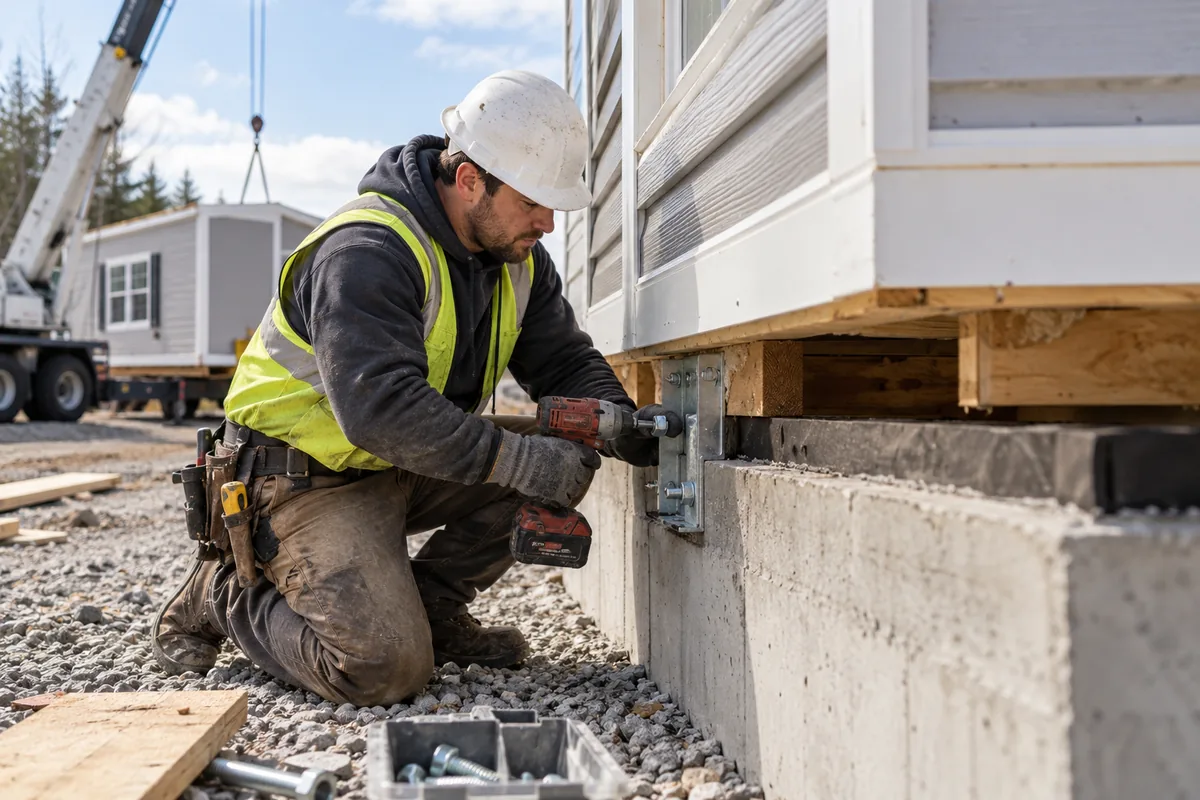
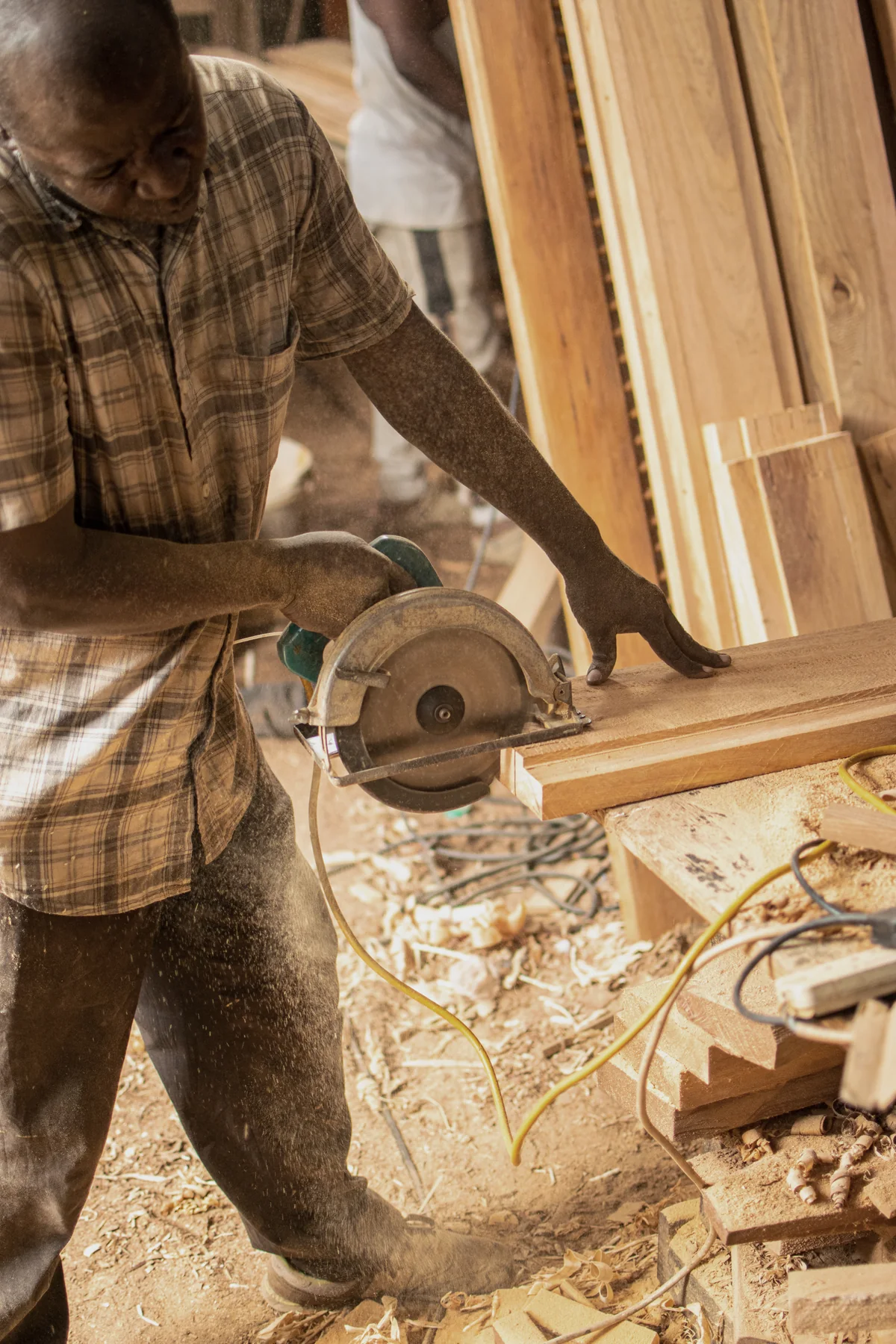
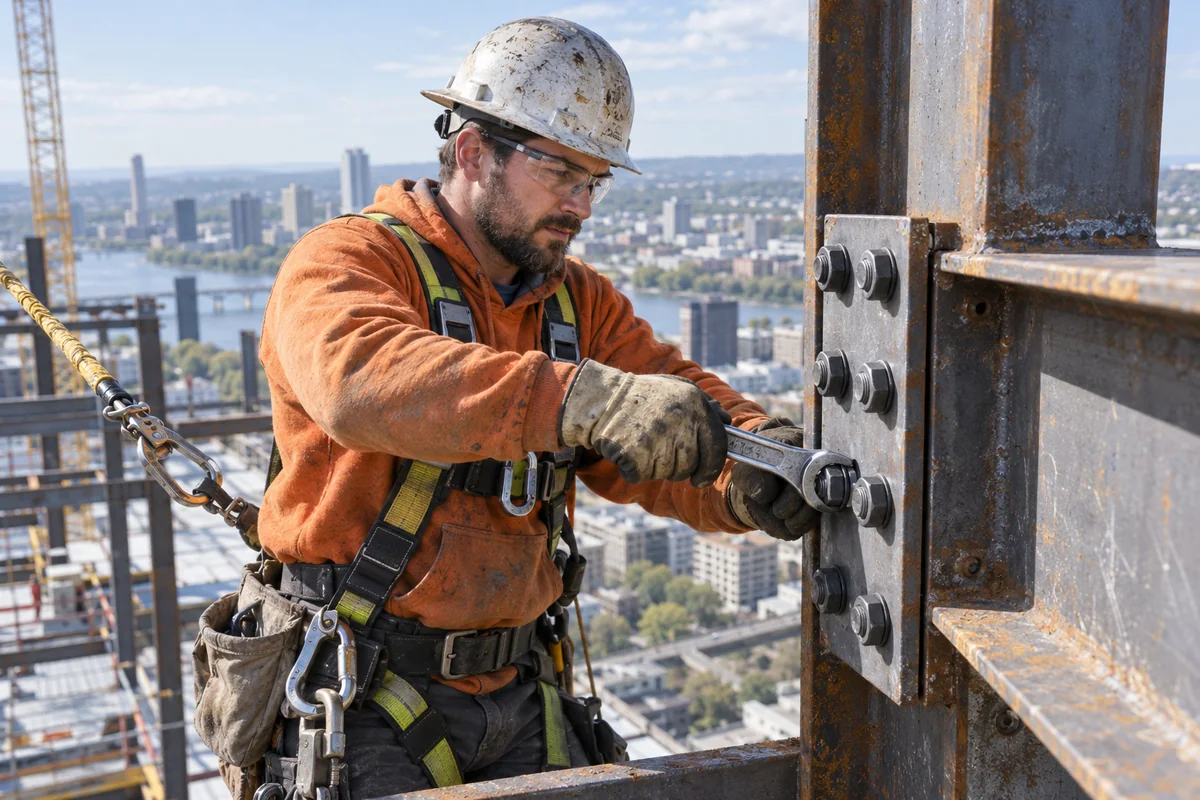
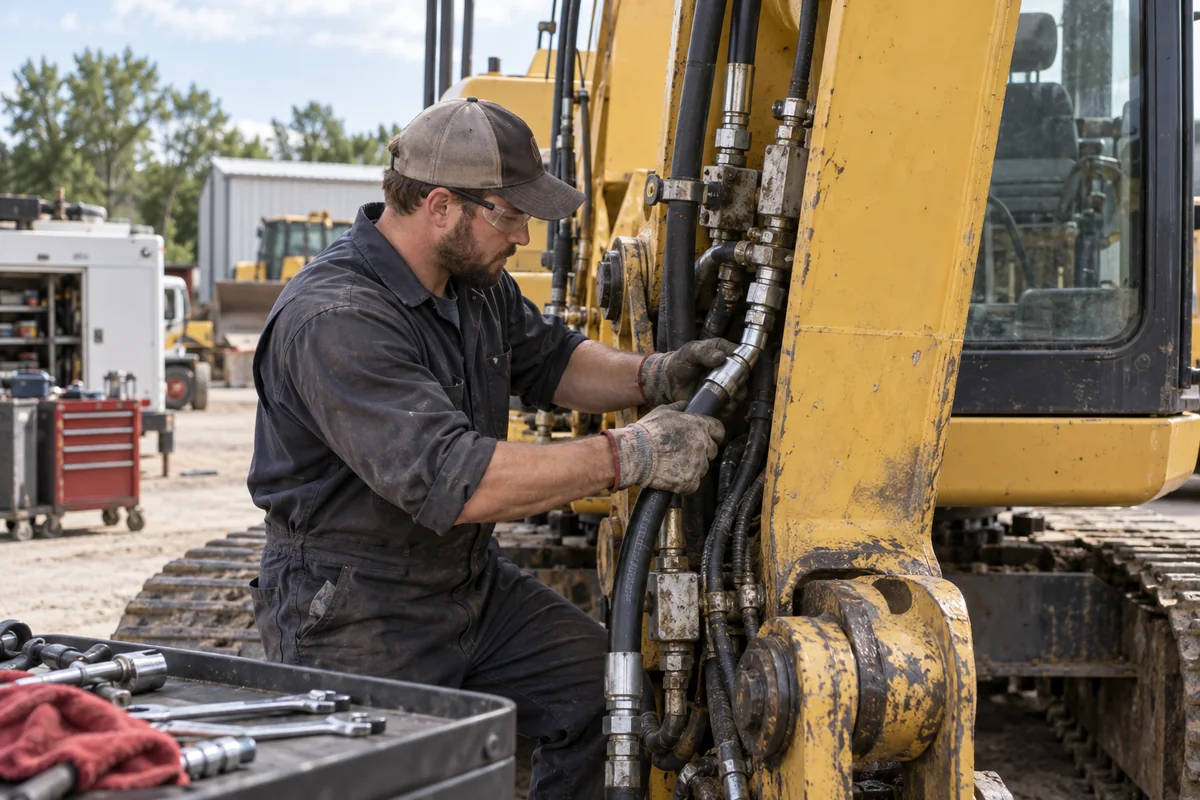
Manufactured home installer joining and securing a prefabricated house module to its foundation at an outdoor worksite.

A day in the life

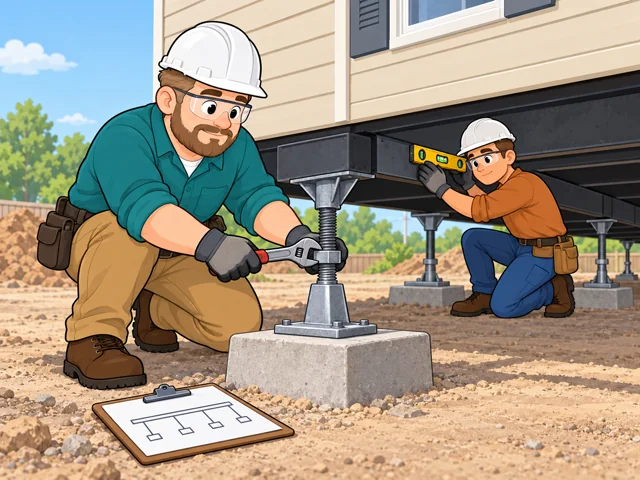
1An installer adjusts a support beneath a manufactured home while a coworker checks the chassis with a spirit level.

Level the house on supports

Set supports under the house, then shift it until it lines up with the installation plan.
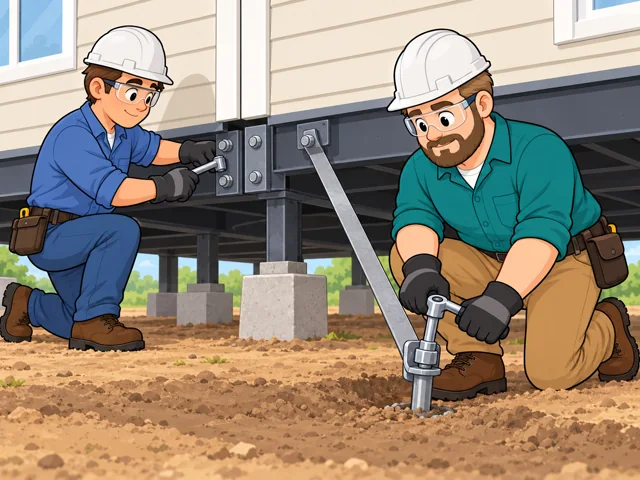
2An installer tightens a steel anchoring strap while a coworker fastens the structural connection between two home sections.

Join sections, then anchor them

Connect the sections structurally first, then attach the straps or foundation anchors that hold the house against wind.
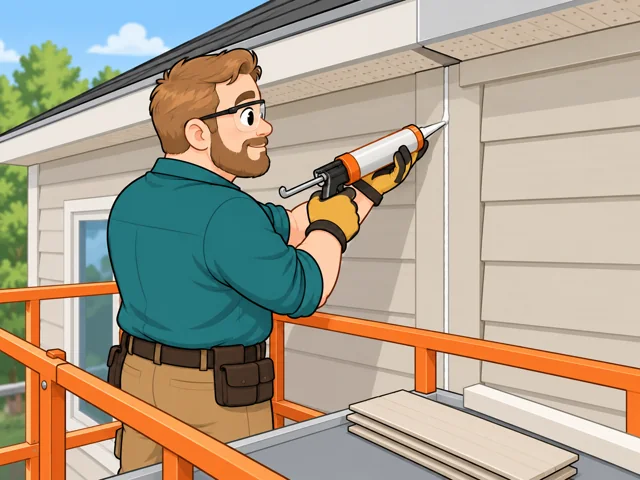
3An installer seals an exterior seam beneath the roof connection, with matching siding and trim ready beside him.

Close up the roof and seams

Finish the roof joins, seal outside seams against weather where sections meet, and add siding and trim.

4Inside the finished home, an installer steadies a partly open door while adjusting its hinge with a screwdriver.

Fix doors and drawers that stick

Open every drawer and door, and if one catches, fix its fit or hardware using hand tools.

Quick facts

Pay

$45,990

Median/year · May 2025

Outlook

5.8% growth

300 openings/yr

Projected · 2025–35

Preparation

High school

+ workplace training

Quick orientation

Preparation, pay & outlook

Preparation

High school + workplace training

Typical preparation is a high school diploma or equivalent and short-term on-the-job training.

Geography
United States
Period
2025

Pay

$45,990/year

Median pay, equivalent to $22.11/hour, for manufactured building and mobile home installers.

Geography
United States
Period
May 2025

Outlook

5.8% projected growth

About 300 openings a year nationally for manufactured building and mobile home installers.

Geography
United States
Period
2025–2035

Fit, tradeoffs & changing tools

Things to weigh

  • Frequent bending, kneeling and crawling can be tiring, and heavy equipment demands attention.
  • Some crews travel overnight and work Saturdays; outdoor work continues across seasons.

Where AI may help

Spreadsheets can help organize parts and cost estimates before the crew starts.

What people still lead

People still check the actual supports, connections and fit against the home's installation instructions.

What we can’t predict yet

How much future equipment can automate positioning and fastening across different home sites remains uncertain.

Pay in context

Earnings

The national median is $45,990 a year, or $22.11 an hour. These figures cover manufactured building and mobile home installers, including work beyond manufactured homes.

Understand the spread

The lowest-paid 10% earned $27,120 or less; the highest-paid 10% earned $60,810 or more. These are wage percentiles, not beginner and experienced pay scales.

Geography
United States
Period
May 2025
Pay basis
Annual employee wages, 10th and 90th percentiles

Experience can affect an offer

Home-setting experience can influence your hourly rate. When comparing jobs, ask about paid travel time and overtime as well as base pay.

Geography
United States
Period
Not stated
Pay basis
Employer hourly wage practices; comparison questions are practical suggestions

A small national occupation

Employment is projected to grow 5.8% from 2025 to 2035, with about 300 openings annually across the broader occupation. That is a national outlook, not a guarantee of nearby openings.

Geography
United States
Period
2025–2035
Pay basis
Employment projection and annual average occupational openings

Getting started

Join a supervised installation crew

What the route involves
Learn setup and finishing as an employee supervised by a licensed installer.
What it can lead to
In the federal program, 1,800 installation hours satisfy one experience route toward licensing.

Use construction-related college study

What the route involves
Complete one year of a college program in a construction-related field.
What it can lead to
This satisfies an alternative federal experience prerequisite; licensing steps still follow.

Check which installation program governs your state before choosing training. States with qualifying programs set their own installer qualifications.

After entry

Career paths

This starts where the entry routes leave off: early work, growing capability, and advancement or specialization. This path also has a credential or licensing boundary; see the requirements and limits.

  1. Get established

    Learn to match the installation drawing to the supports and connections in front of you.

  2. Handle more of the setup

    Build skill in multisection assembly, roof closure and interior finishing.

  3. Move toward crew leadership

    Coordinate people, materials and work order as a crew lead.

Where you can work

New-home set crews

Work outdoors with a crew assembling delivered homes. Moving between sites can mean overnight travel.

  • Outdoors
  • Field work
  • Travel
  • Physical demands
  • Safety-sensitive

Home service and repair

Some jobs focus on existing homes: discuss problems with customers, read work orders and repair panels, fittings or finishes.

  • Indoors
  • Outdoors
  • Field work
  • Physical demands

Try it

See whether the job clicks before you commit to the path.

Look at a manufactured-home support diagram in the federal installation standards. Sketch where the home rests and where it is secured, then explain the difference to someone. Notice whether translating a drawing into physical parts interests you.

Stay safe: Keep this a paper exercise; do not crawl under or attempt to move a home.

Explore more careers

Sources

  1. O*NET OnLine. Manufactured Building and Mobile Home Installers — 49-9095.00. Accessed 2026-10-06.
  2. O*NET OnLine / U.S. Bureau of Labor Statistics. 2025 wages for 49-9095.00 — United States rows. Accessed 2026-10-06.
  3. U.S. Bureau of Labor Statistics. Table 1.2 Occupational projections, 2025–35, and worker characteristics, 2025. Accessed 2026-10-06.
  4. Champion Homes. Manufactured Mobile Home / HUD Home Set Crew. Accessed 2026-10-06.
  5. U.S. Department of Housing and Urban Development / eCFR. 24 CFR Part 3285 — Model Manufactured Home Installation Standards. Accessed 2026-10-06.
  6. U.S. Department of Housing and Urban Development / eCFR. 24 CFR Part 3286 Subpart C — Installer Licensing in HUD-Administered States. Accessed 2026-10-06.
  7. U.S. Department of Housing and Urban Development / eCFR. 24 CFR Part 3286 Subpart I — State Programs. Accessed 2026-10-06.

Your message goes to the Great Jobs team. How we use your information